Summer break is here. Your kids are home all day.
The first week feels great. Everyone sleeps in. You all relax. But soon, you hear those dreaded words: “I’m so bored!”
Sound familiar? You’re not alone. Most parents face this same challenge every summer.
The good news? You don’t need expensive trips or fancy camps to keep your children happy. This guide shares simple, fun, and affordable summer activities for kids that actually work.
From water play and outdoor games to rainy day crafts and educational fun, you’ll find ideas for every age, interest, and budget. Many activities cost little to nothing. Most use items you already have at home.
Ready to make this the best summer ever? Let’s get started.
Perfect! Let me rewrite the section with each activity at approximately 90 words.
Outdoor Water Activities
Nothing beats the heat like water play. These activities keep kids cool and entertained for hours.
Water activities are perfect for hot summer days. They help kids stay active without overheating. Most options cost little to nothing and use items you already own.
From simple sprinkler fun to DIY water blobs, these ideas work for all ages. Toddlers and teens alike will find something they enjoy. Best of all, water play happens right in your own backyard.
1. Water Balloon Fight

Fill up dozens of balloons and let the fun begin. Kids love the splash and excitement of a good water balloon battle.
Use biodegradable balloons to protect your yard. Set up teams for added competition. Create safe zones where younger kids can hide and reload.
This activity works for all ages and gets everyone moving. Make it more interesting by adding target zones or point systems. Kids can practice their aim and speed.
Water balloon fights are perfect for birthday parties or weekend fun. Just prepare extra towels and a change of clothes. The cleanup is simple, and the memories last forever.
2. Run Through the Sprinkler
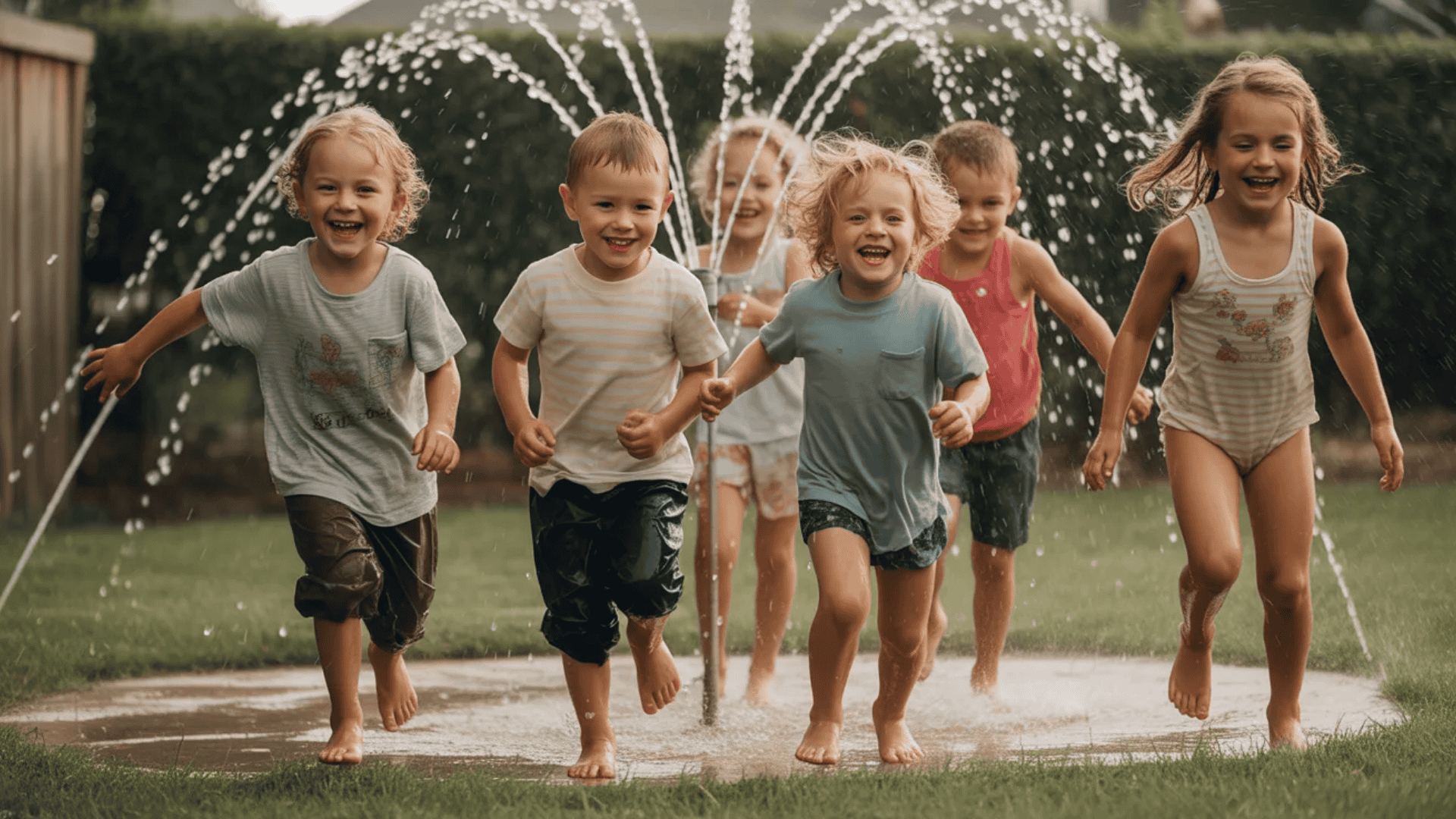
Turn on your garden sprinkler and watch your kids squeal with joy. This classic activity never gets old.
Set up different sprinkler patterns. Try oscillating, rotating, or misting types. Kids can jump over the water stream or dance through the spray.
Make it a game by timing who can stay under the longest. Or create challenges like hopping on one foot through the water. Add music to turn it into a dance party.
This costs nothing extra if you already water your lawn. It’s simple, free, and tons of fun. Your water bill stays the same while your kids stay cool.
3. DIY Water Table
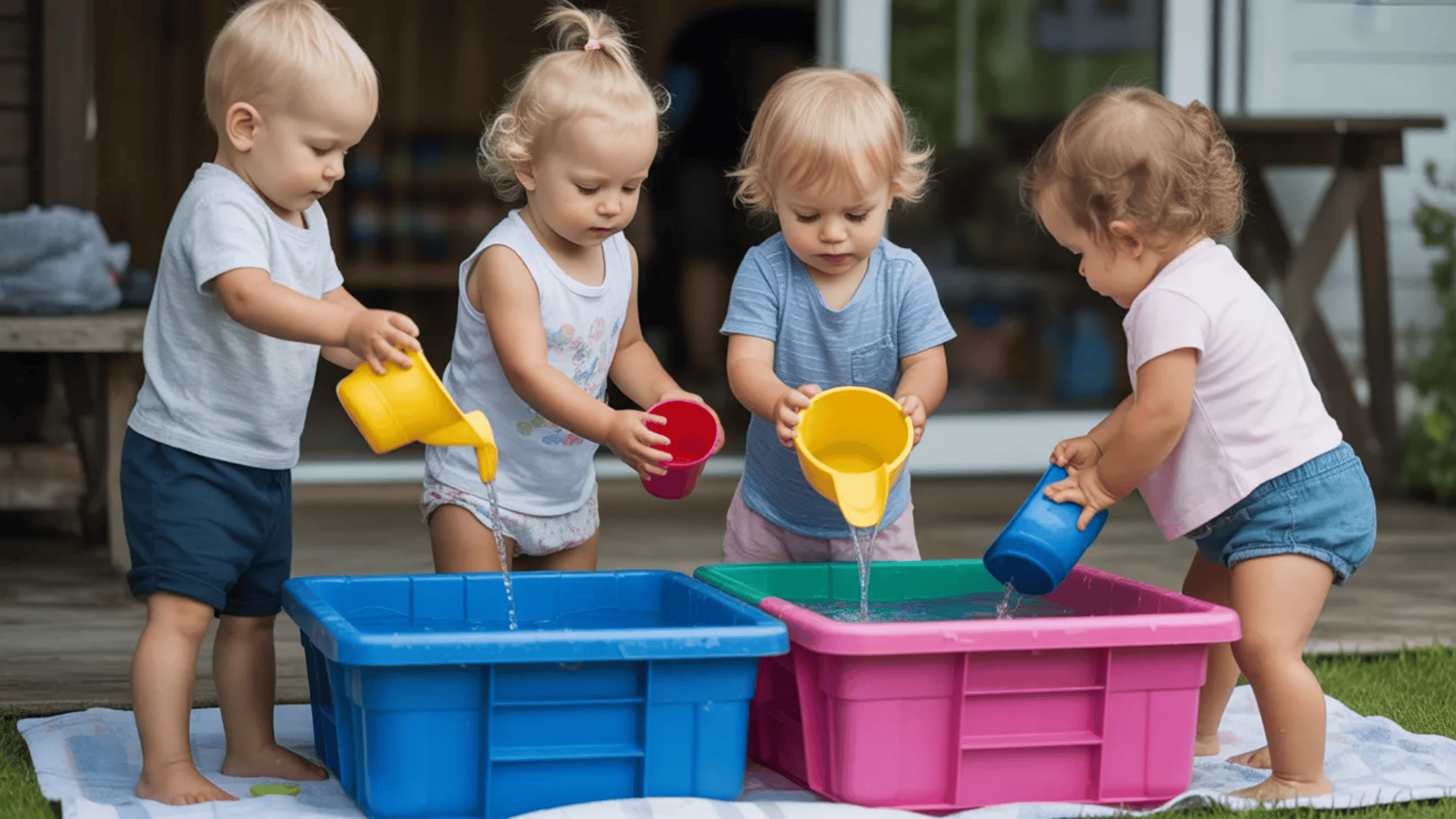
No fancy water table? No problem. Use plastic storage bins filled with water.
Add cups, funnels, toy boats, and measuring spoons. Kids can pour, splash, and experiment. Throw in some floating toys or sponges for extra fun.
This activity works great for toddlers and preschoolers. It keeps them busy while building motor skills. They learn about volume, cause and effect, and hand coordination.
Set up the bins on your patio or deck. Place towels underneath to catch spills. Change the water daily to keep it fresh. Add food coloring for sensory play variety.
4. Homemade Water Blob
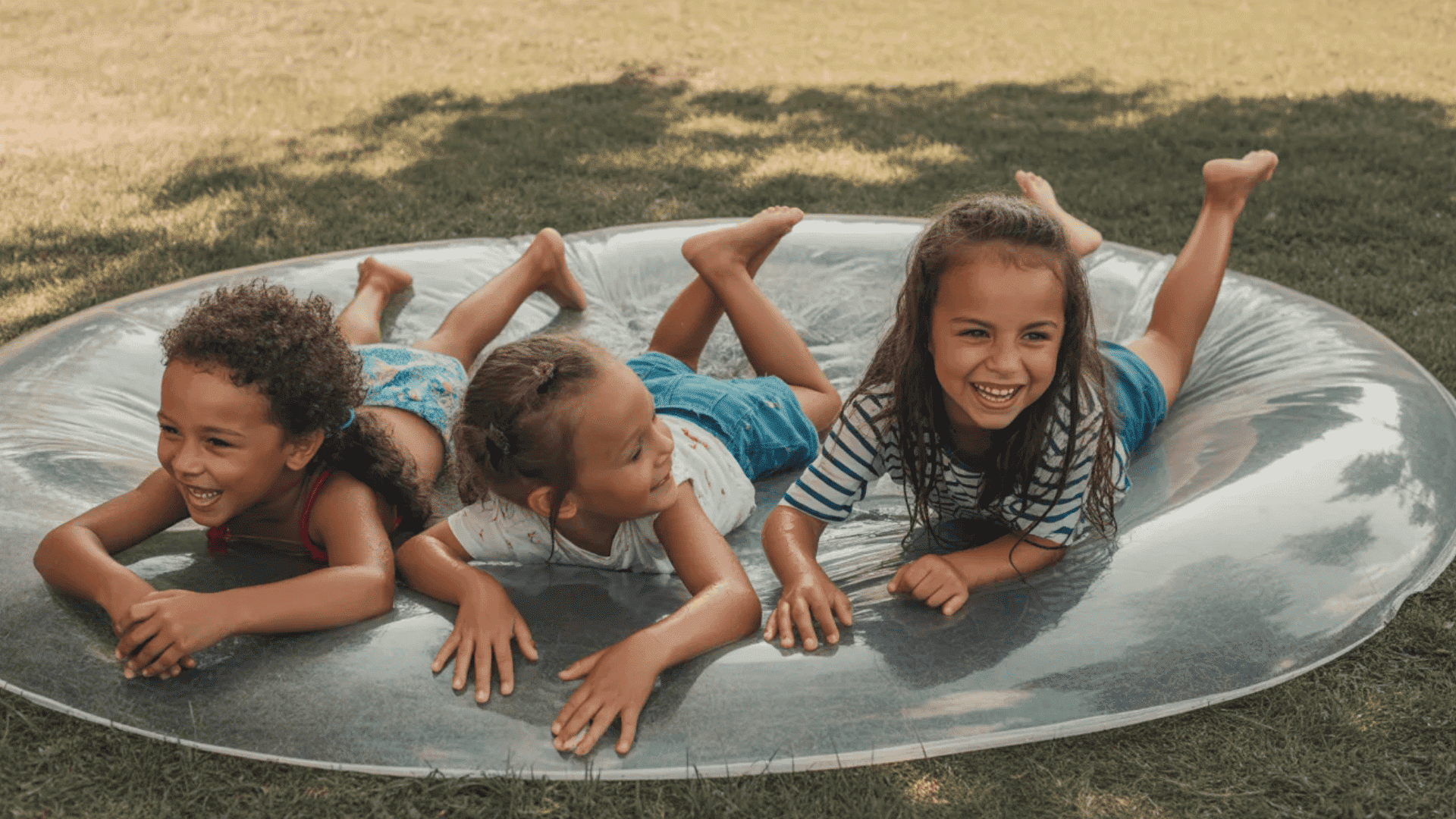
Create a giant water blob using a plastic sheet and duct tape. Fill it with water and seal the edges.
Kids can jump, slide, and roll on this squishy surface. The sensation is unique and refreshing. Some kids love lying on top and feeling the water move beneath them.
Setup takes about 20 minutes but provides hours of entertainment. Use a clear plastic sheet so kids can see the water inside. Place it on grass in a shady spot.
This combines sensory play with outdoor fun. It’s great for hot days when kids need to cool down. Adults enjoy it too!
5. Bubble Blowing Fun
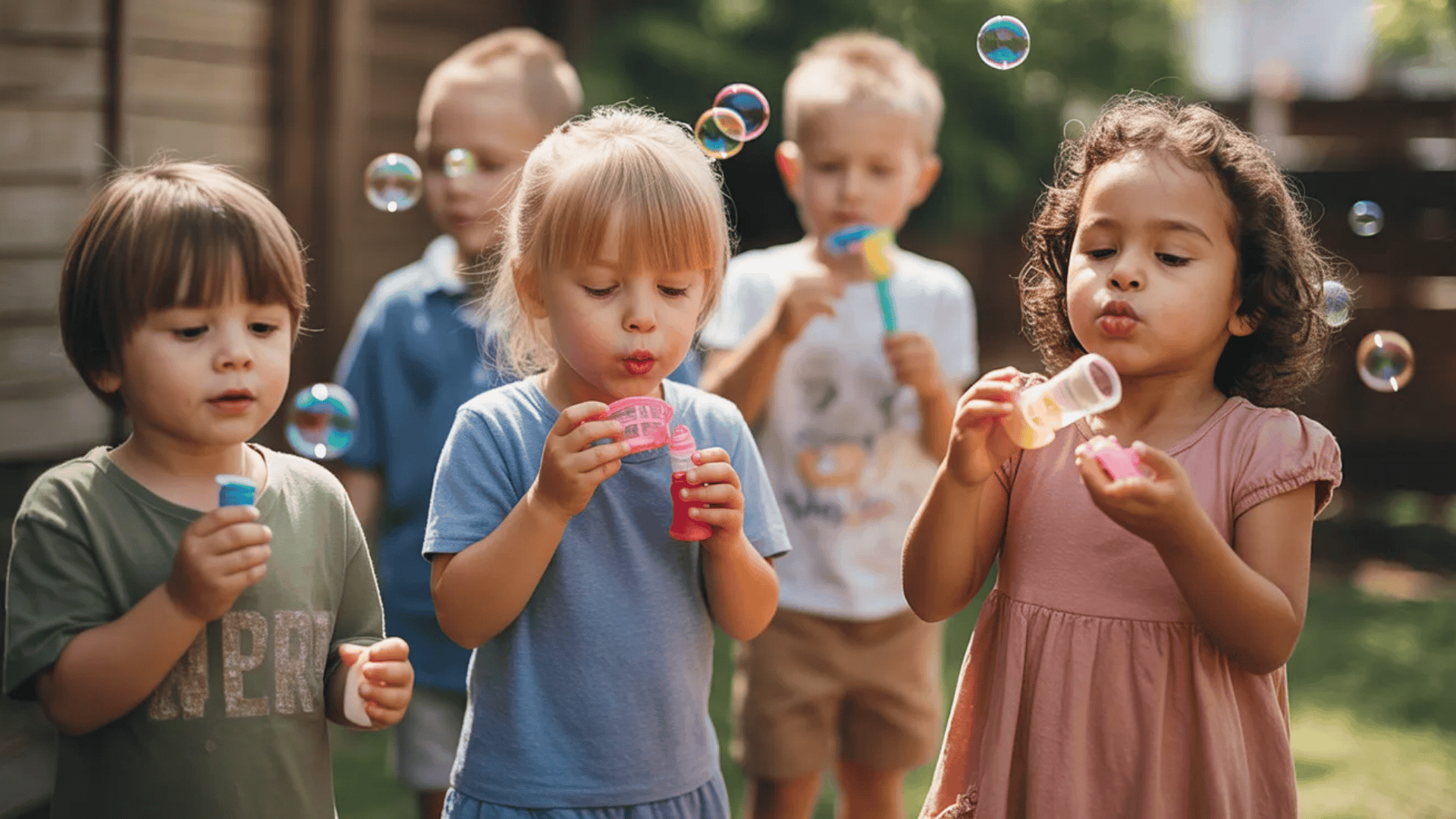
Make your own bubble solution or buy a kit. Then grab bubble wands and head outside.
Mix dish soap with water and add glycerin for stronger bubbles. Use different objects as wands, like fly swatters, cookie cutters, or hula hoops. Wire hangers bent into circles also work well.
Try making giant bubbles with larger wands. See who can blow the biggest one. Chase and pop them for extra giggles.
Bubble play helps kids develop breath control and motor skills. It’s calming and fun at the same time. Bring bubbles to the park or beach for instant entertainment anywhere.
6. Car Wash Day
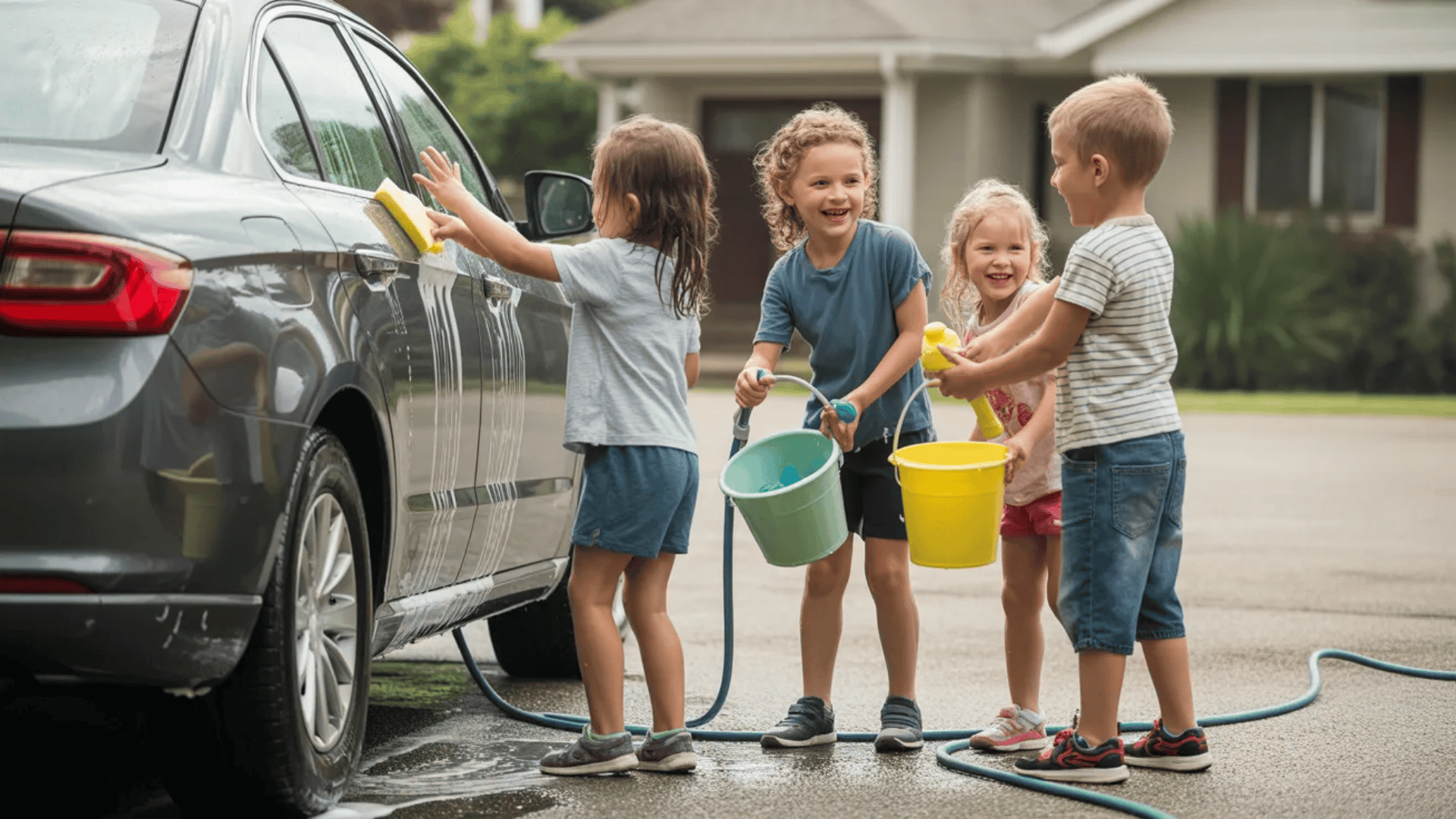
Hand your kids sponges, soap, and a hose. Let them wash the family car.
They’ll feel helpful and responsible. Plus, they get to play in water while doing a real job. Give them buckets to fill and squeegees to use.
Don’t worry about getting the car perfectly clean. Focus on the fun, not perfection. Kids love seeing the soap suds and watching dirt rinse away.
Make it educational by talking about different car parts. Let older kids handle the hose while younger ones scrub. Everyone gets involved, and the car looks better.
7. Backyard Pool Day
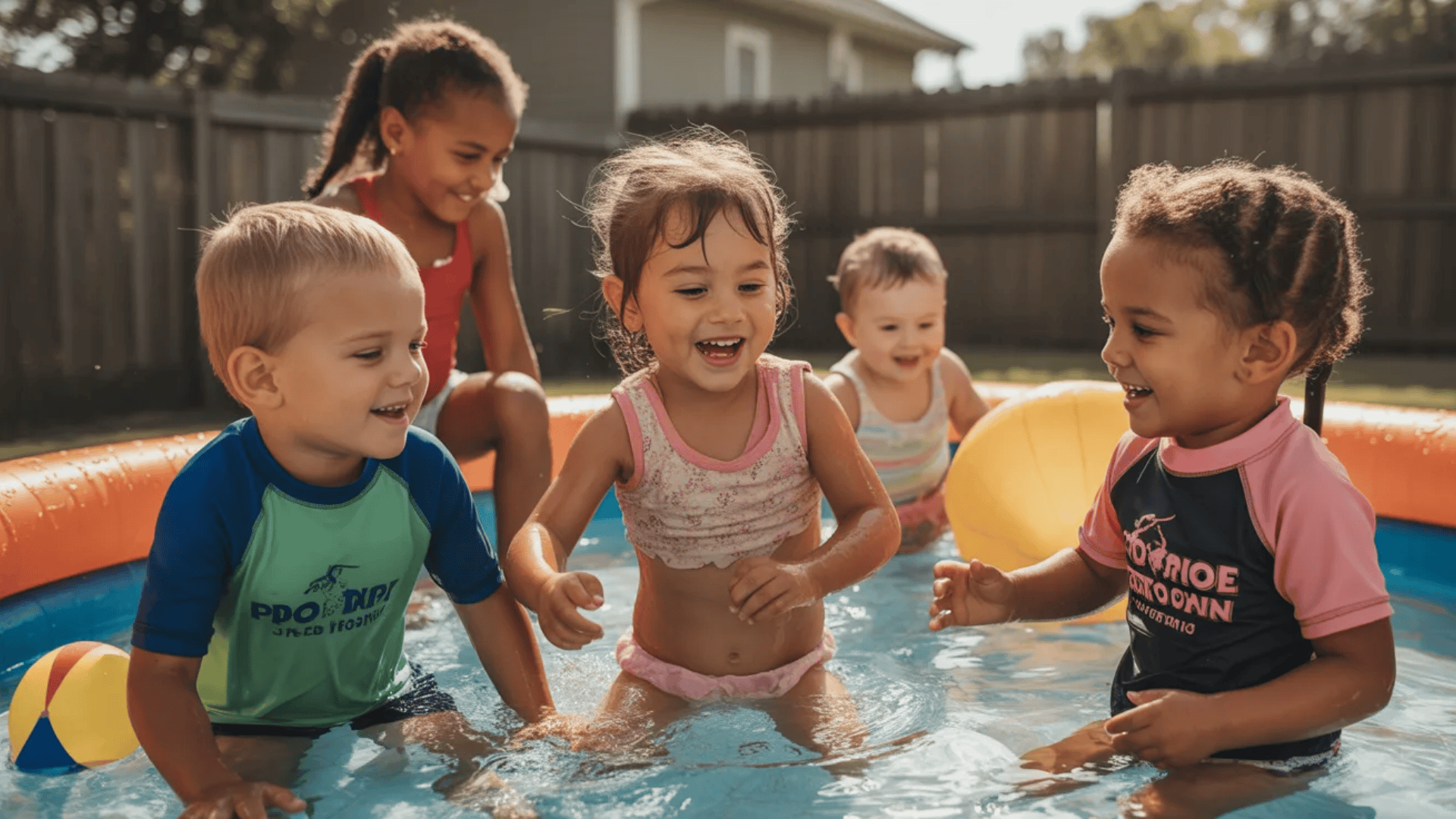
If you have a pool, you’re set. No pool? Try an inflatable kiddie pool instead.
Even small pools provide relief from the heat. Add floating toys, beach balls, or diving rings. Pool noodles make great toys, too.
Supervise closely and apply sunscreen regularly. Pool time is perfect for hot afternoons. Set a timer for sunscreen reapplication every two hours.
Create pool games like Marco Polo or underwater treasure hunts. Freeze small toys in ice blocks and let kids watch them melt in the pool. Teach swimming skills during play time for added value.
8. Make Frozen Treats
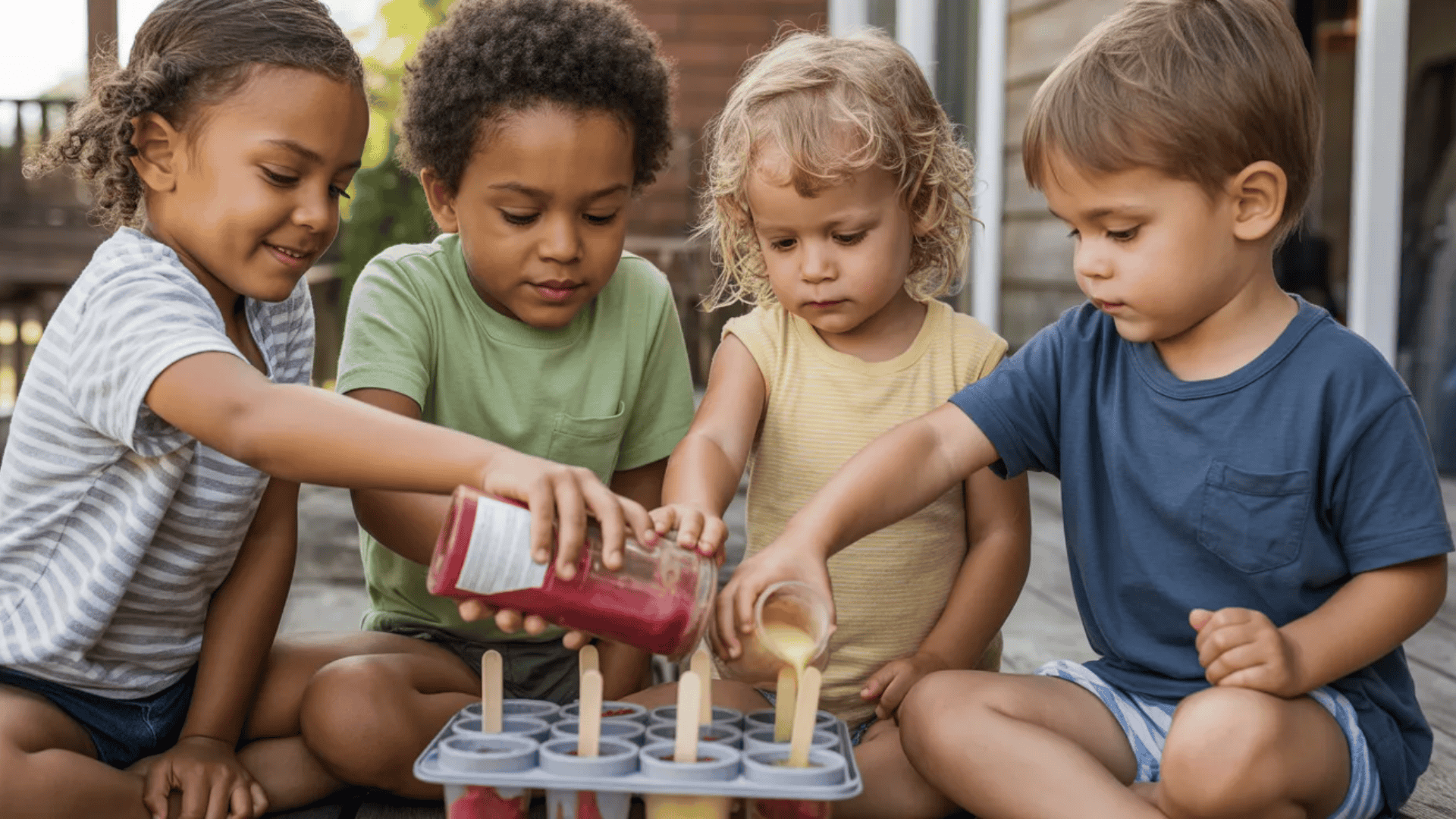
Cool down from the inside out. Make homemade popsicles with juice or fruit.
Pour juice into molds and freeze overnight. Try different flavors like orange, grape, or mixed berry. Add fresh fruit pieces for texture and nutrition.
Kids can help pour and choose flavors. Let them experiment with combinations. Try yogurt mixed with honey and berries for a healthy option.
Eating these treats outside makes cleanup easy. No sticky floors or furniture to clean. Give each child a paper towel to catch drips.
Store-bought popsicles work too, but homemade ones cost less and taste better.
Nature and Garden Fun
Get your kids outside and exploring. These activities connect children with nature while keeping them active and learning.
Nature activities teach kids about the environment. They build curiosity about plants, animals, and weather. Most importantly, they get children away from screens and into the fresh air.
You don’t need special equipment or training. Your backyard or local park has everything you need. These activities work in any season but shine during warm summer months.
Kids who spend time in nature develop stronger observation skills. They learn patience, responsibility, and respect for living things. Plus, outdoor exploration boosts mood and reduces stress naturally.
9. Plant a Garden
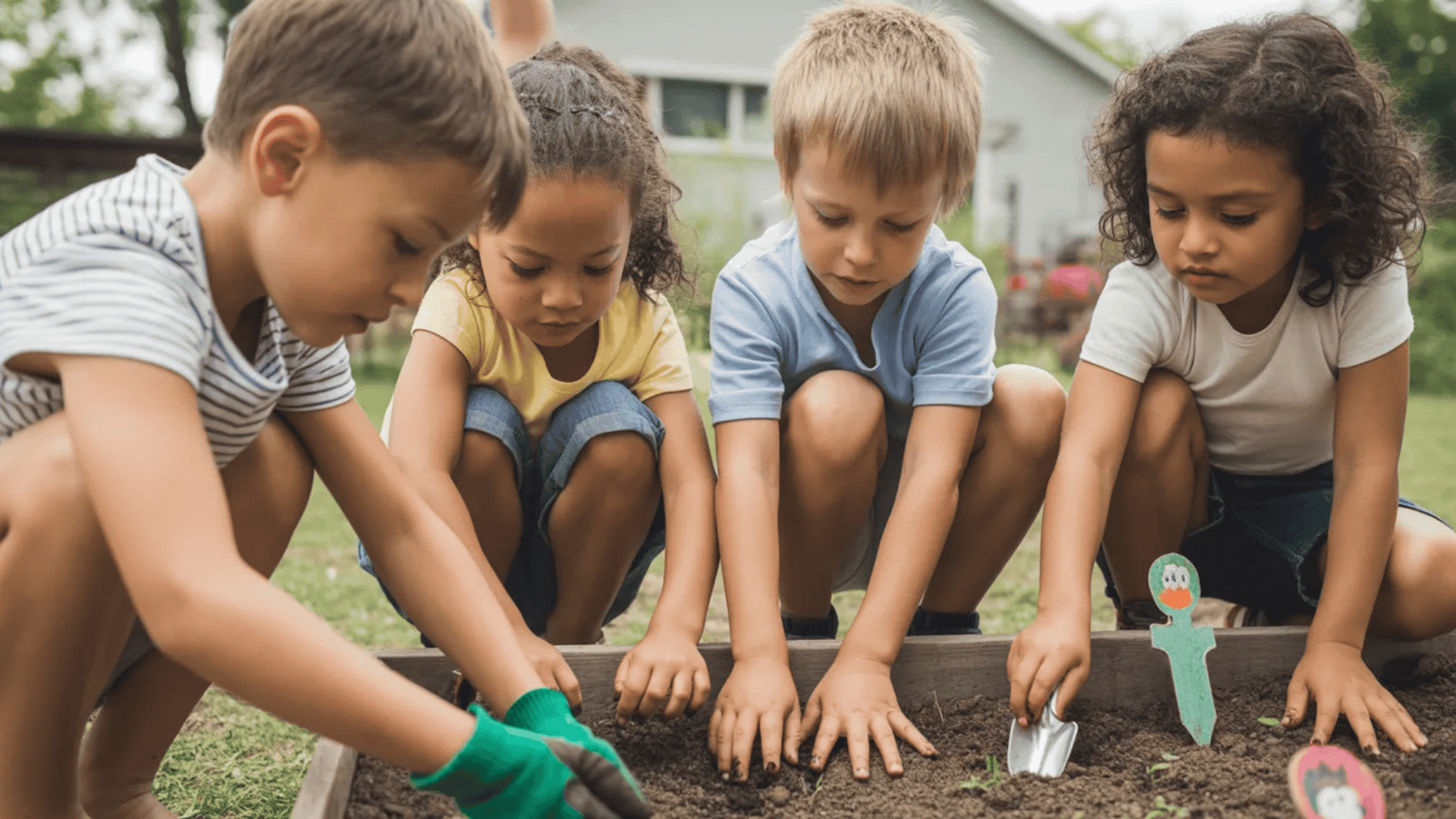
Start a small garden with your kids. Choose fast-growing plants like radishes, sunflowers, or cherry tomatoes.
Let kids pick what they want to grow. Give them their own small plot or container. They’ll feel ownership over their plants.
Teach them to water, weed, and check for bugs. Gardening builds patience and responsibility. Kids love watching seeds sprout and grow taller each day.
A garden keeps giving all summer long. Kids can snack on fresh veggies straight from the soil. They learn where food comes from and develop healthy eating habits.
Make it fun by decorating plant markers together. Use painted rocks or popsicle sticks with plant names. Take photos each week to track growth progress.
10. Nature Scavenger Hunt
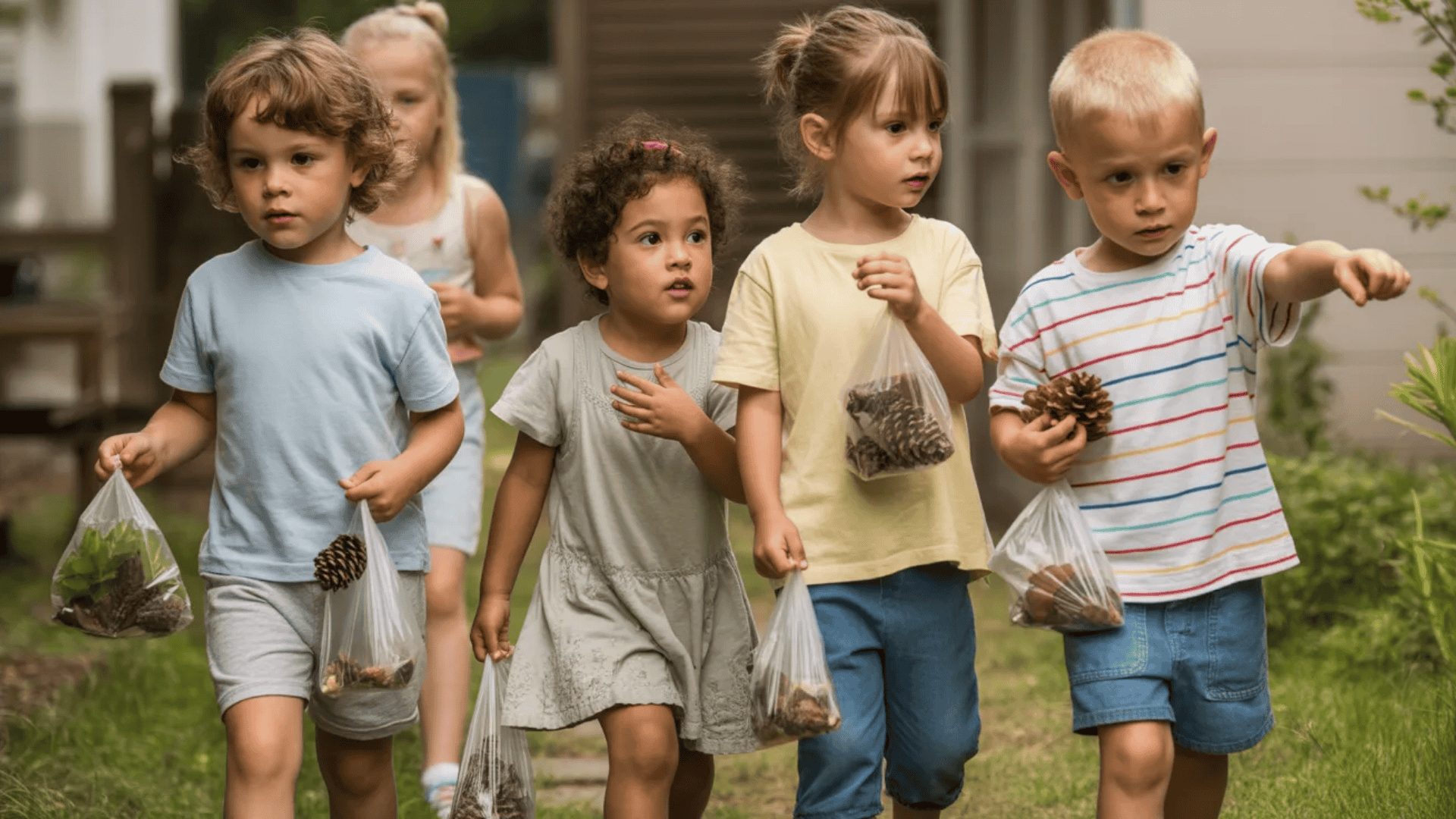
Create a list of items for kids to find outside. Include things like pinecones, smooth rocks, bird feathers, and different colored leaves.
Give each child a bag to collect treasures. Walk around your yard or neighborhood together. Point out interesting plants and insects along the way.
This activity teaches observation skills. Kids learn to notice small details in nature. They discover things they walk past every day without seeing.
Make the hunt more challenging for older kids. Ask them to find specific leaf shapes or count different bird species. Younger kids can search for colors or textures.
Turn findings into art projects later. Press flowers, paint rocks, or make nature collages. The scavenger hunt becomes two activities in one.
11. Build a Fairy Garden
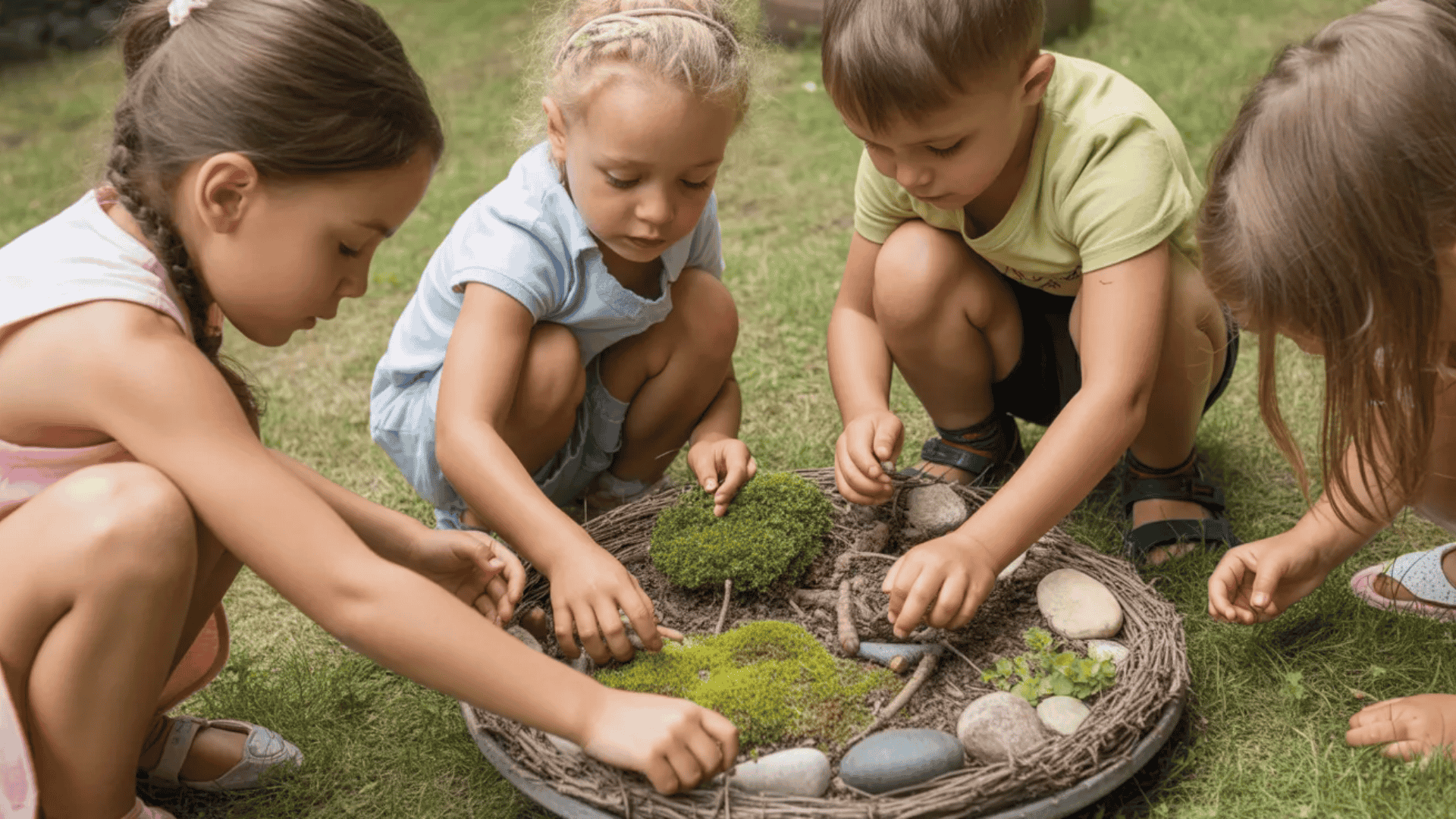
Collect twigs, moss, acorns, and small stones. Create tiny houses and gardens for imaginary creatures.
Kids can build in a corner of your yard or in a large container. Use natural materials to make furniture, pathways, and decorations. Small flowers add color and life.
This activity sparks creativity and imagination. There’s no right or wrong way to build. Each child creates their own magical world.
Check on the fairy garden daily. Kids can add new features or rearrange things. Some families leave tiny notes or treasures for the fairies to find.
Fairy gardens teach kids to work with natural materials. They learn about different plants and how things grow. The garden can last all summer with proper care.
12. Go Bird Watching
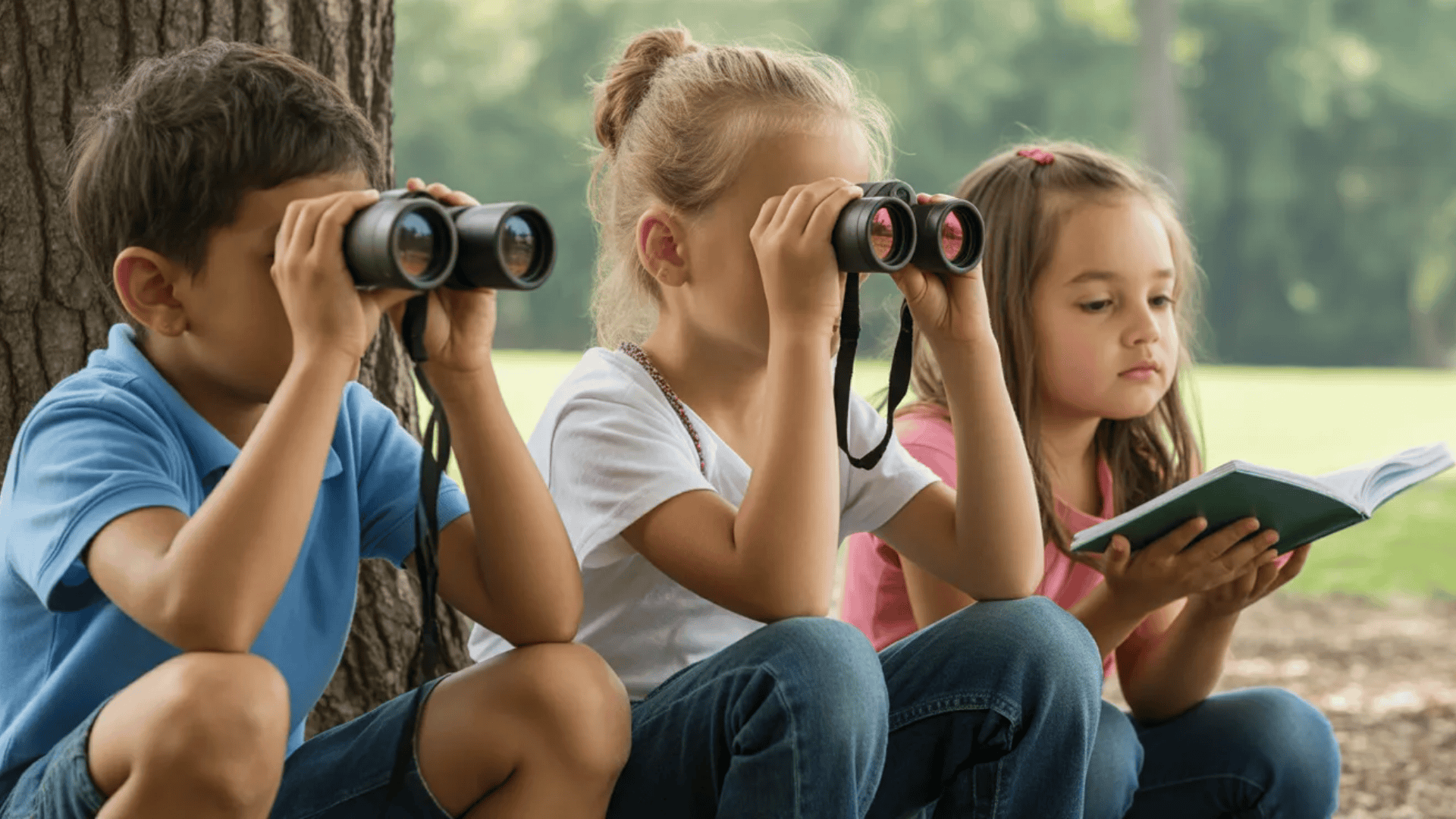
Grab binoculars and a bird identification book. Head to your backyard or a local park.
Sit quietly and watch for birds. Listen to their songs and calls. Try to identify different species by their colors and markings.
Keep a bird journal with drawings or notes. Kids can track which birds they see and when. This builds observation and documentation skills.
Make simple bird feeders from pinecones, peanut butter, and birdseed. Hang them outside your window. Watch birds come to feed throughout the day.
Bird watching teaches patience and focus. Kids learn about local wildlife and habitats. It’s a peaceful activity that works for all ages and abilities.
13. Create Nature Art
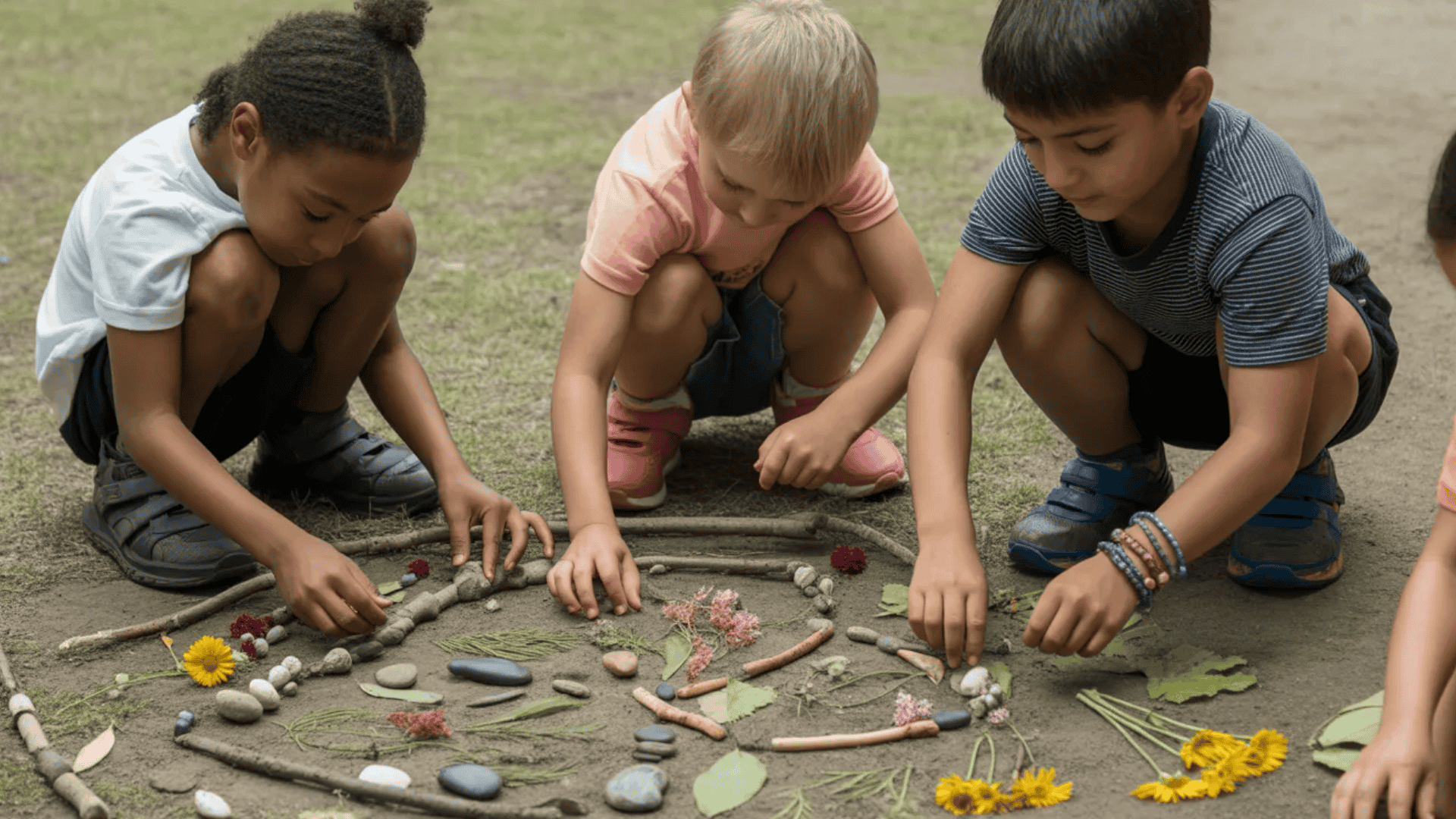
Use flowers, leaves, and sticks to make outdoor art. Arrange them into patterns, pictures, or designs on the ground.
Try making mandalas with petals and stones. Create faces using twigs and berries. Build stick houses or leaf collages. Let imagination guide the process.
Take photos of finished art before the wind scatters it. This teaches kids that some art is temporary. The process matters more than keeping the product forever.
Collect pressed flowers to make permanent art later. Place flowers between heavy books for a week. Then glue them onto paper or cardstock for keepsakes.
Nature art costs nothing and uses materials all around you. It combines creativity with outdoor time. Kids develop an appreciation for natural beauty and color.
14. Start a Bug Collection
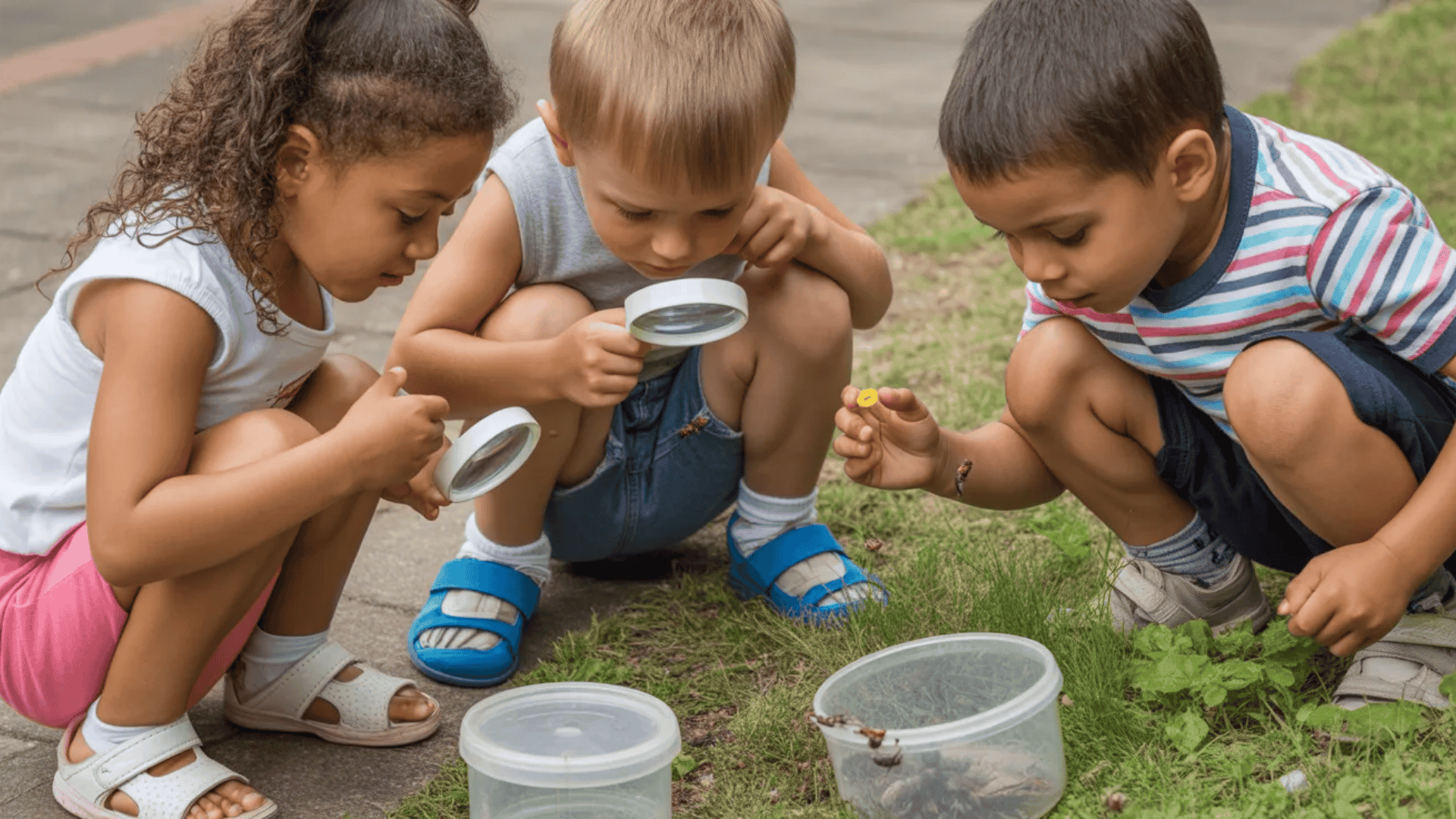
Catch and observe insects with your kids. Use clear containers with air holes for temporary bug houses.
Look under rocks, near flowers, and in grass. Find ants, beetles, ladybugs, and butterflies. Watch how they move and behave.
Release bugs after observation. Talk about what makes each insect special. Count legs, look at colors, and notice wing patterns.
Get a magnifying glass for closer looks. Kids will see details they never noticed before. This builds curiosity about the natural world.
Check out library books about insects. Help kids identify what they found. Learn which bugs help gardens and which ones cause problems. Bug hunting turns into science lessons naturally.
15. Cloud Watching
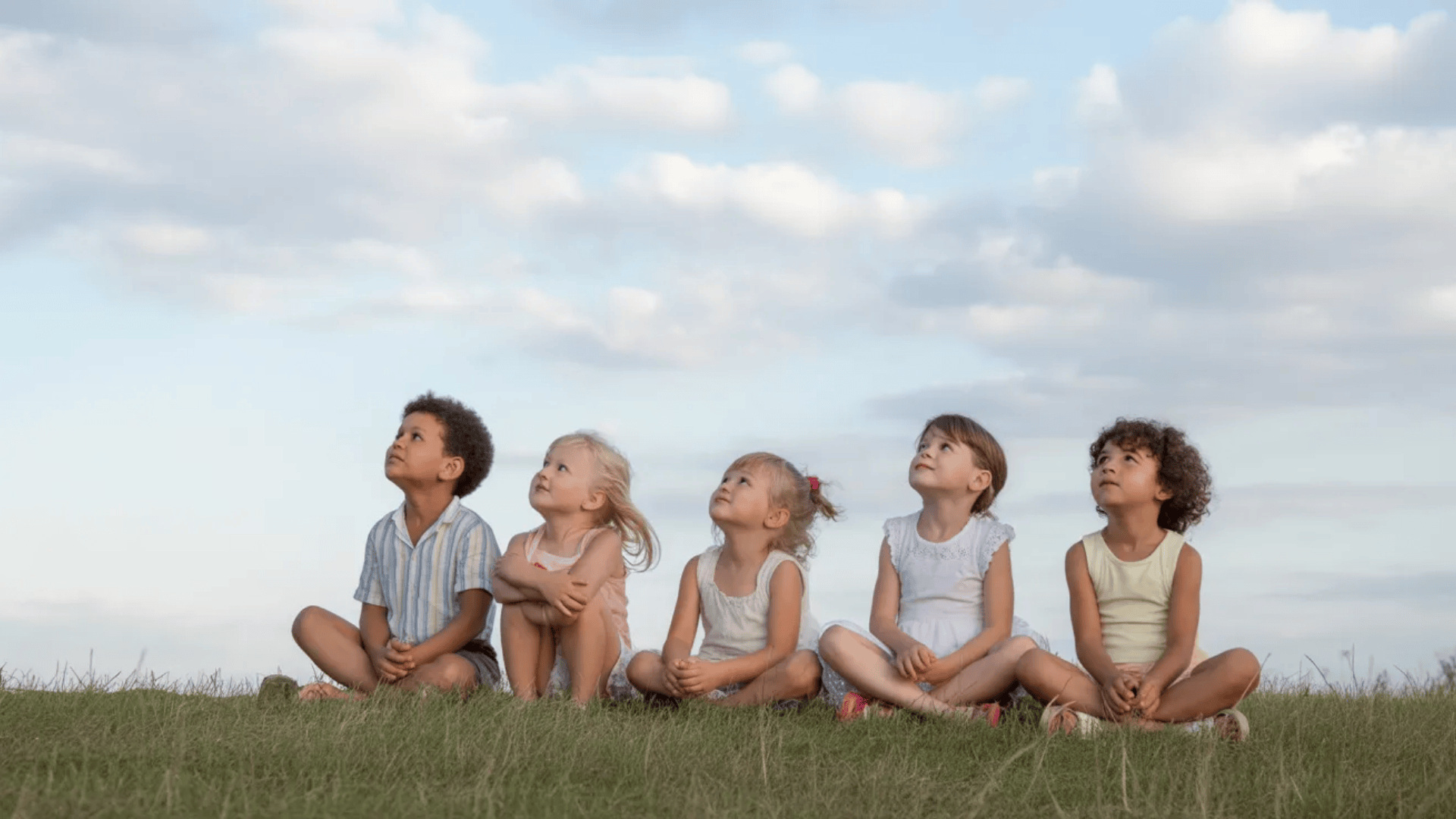
Lie on a blanket and look up at the sky. Find shapes in the clouds together.
Ask kids what they see. One cloud might look like a dragon while another resembles a boat. Everyone sees something different.
Make up stories about the clouds. Where are they going? What are they doing? This builds storytelling and imagination skills.
Cloud watching requires no supplies or planning. Just find a comfortable spot with a clear view. It’s perfect for quiet afternoons when kids need to slow down.
Talk about different cloud types if kids show interest. Explain why clouds change shape and move. Simple weather lessons happen naturally during cloud-watching time.
Creative Arts and Crafts
Rainy day? Too hot outside? Arts and crafts save the day when outdoor play isn’t an option.
Creative activities keep kids busy for hours. They build fine motor skills, problem-solving abilities, and self-expression. Plus, kids feel proud when they make something with their own hands.
Most craft supplies are inexpensive. Many projects use items you already have at home. Paper, crayons, glue, and scissors go a long way toward endless possibilities.
Arts and crafts work for all ages and skill levels. Toddlers can finger paint while older kids tackle complex projects. Everyone creates at their own pace without pressure or competition.
16. Paint Rocks
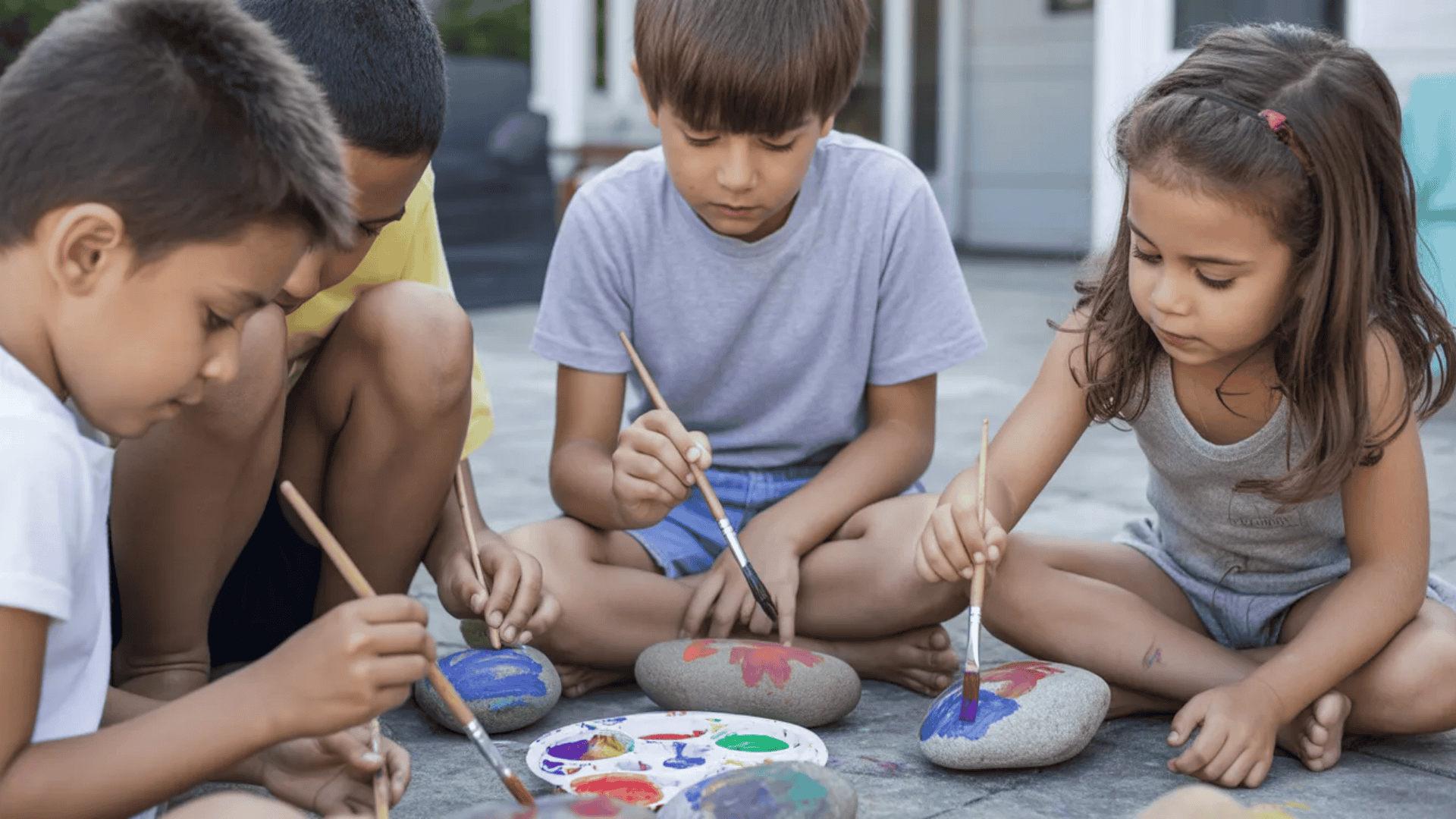
Collect smooth rocks from your yard or park. Wash and dry them completely before starting.
Use acrylic paint or paint markers to decorate. Kids can make ladybugs, fish, monsters, or abstract designs. Let each coat dry before adding details.
This craft is simple but satisfying. Younger kids enjoy covering rocks in solid colors. Older ones can paint detailed scenes or characters.
Turn painted rocks into garden decorations. Use them as paperweights or gifts for family members. Some communities have rock hiding groups where you leave painted rocks for others to find.
Seal finished rocks with clear coating spray. This protects the paint from weather and handling. Your art rocks will last for years outdoors or inside.
17. Make Friendship Bracelets
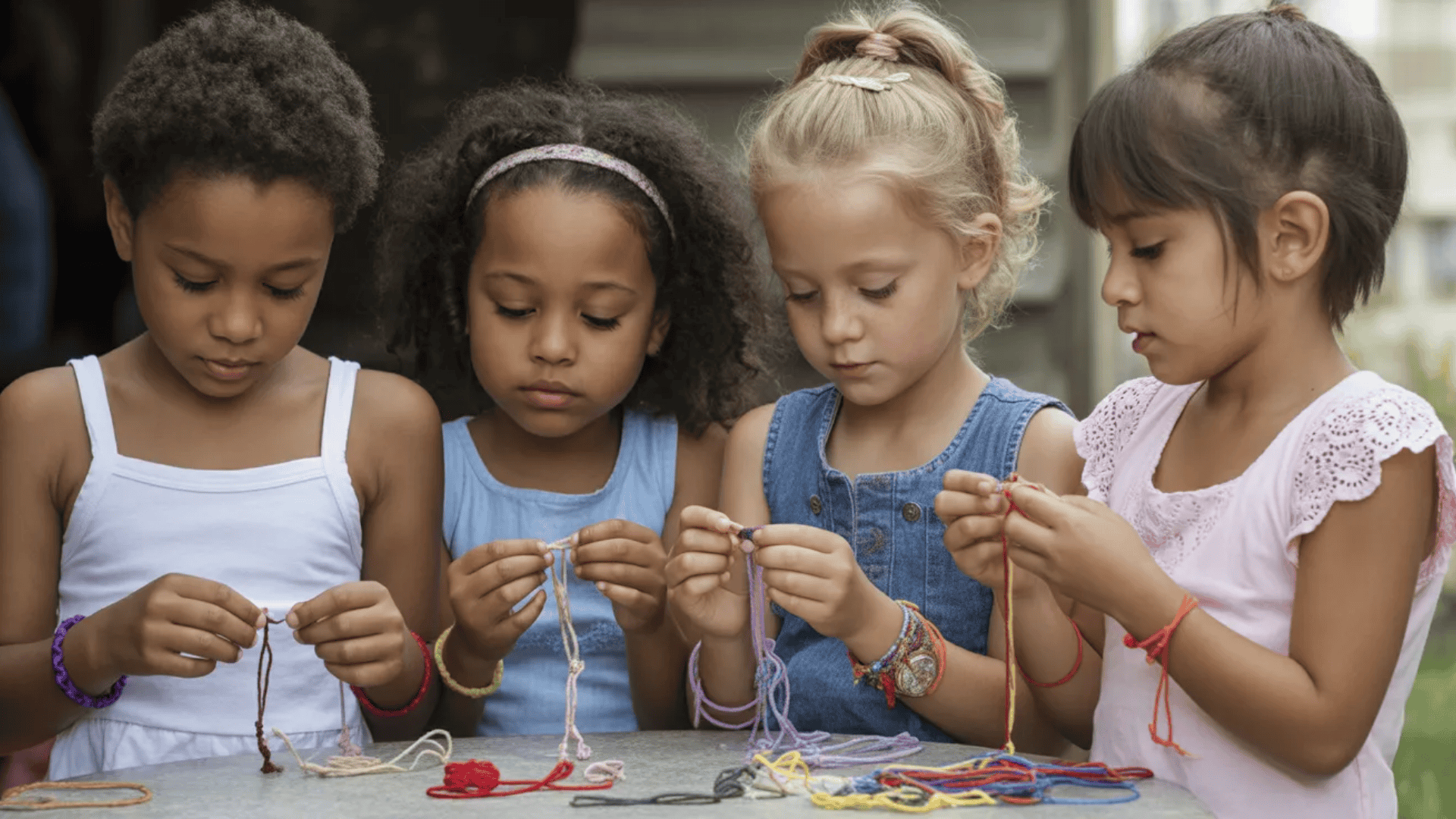
Teach kids to make friendship bracelets with embroidery floss. Start with simple patterns like stripes or braids.
Cut three or more strands of floss about arm length. Tie them together at one end. Tape the knot to a table to hold it steady.
Show kids basic knots and patterns. They’ll improve with practice. Making bracelets builds hand coordination and concentration skills.
Kids can wear their creations or give them as gifts. Each bracelet represents time and effort. Friends treasure handmade gifts more than store-bought items.
Look up pattern tutorials online for variety. Try chevron, diagonal, or diamond designs. The more kids practice, the faster and better they become at bracelet making.
18. Create Tie Dye Shirts
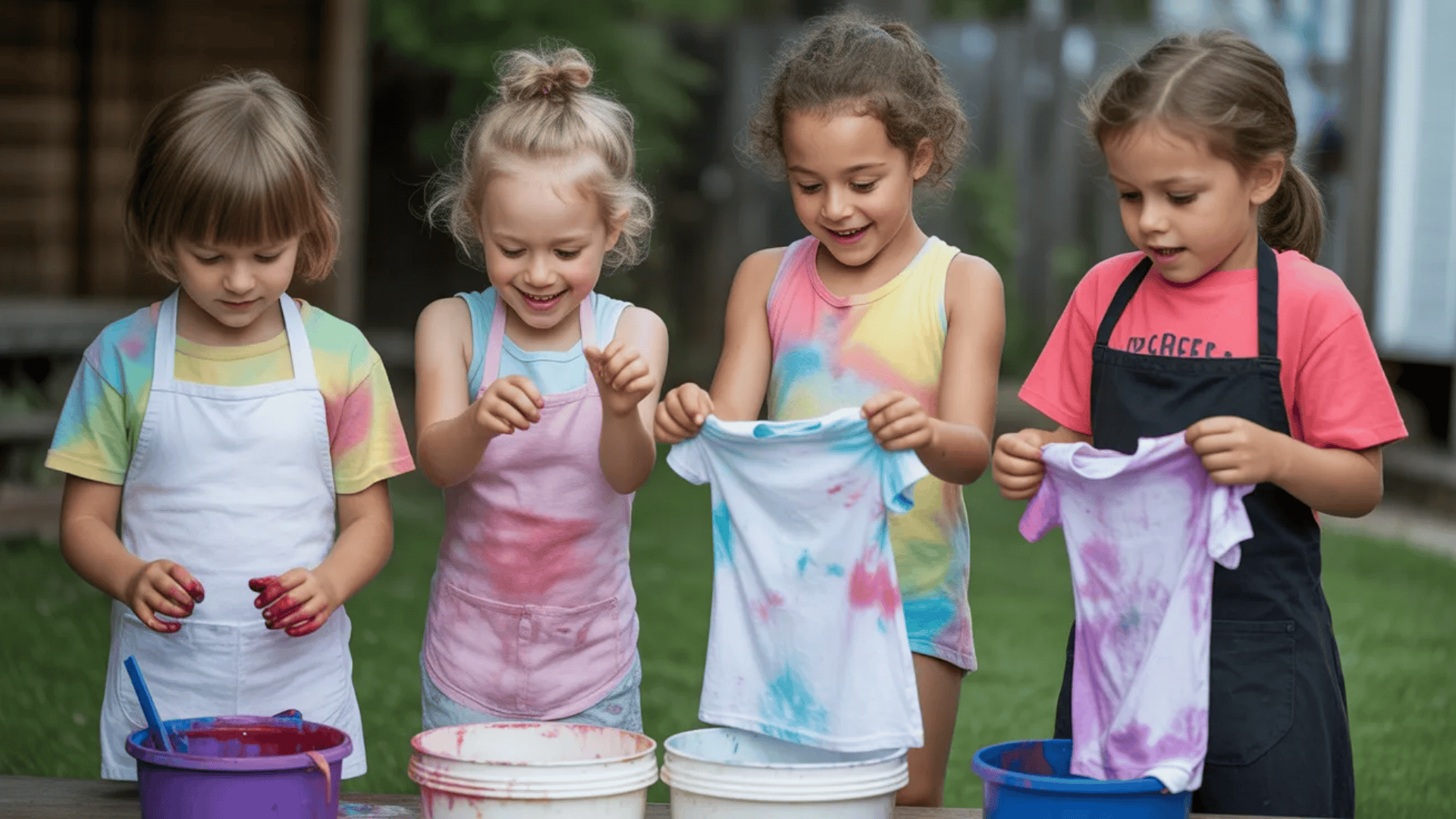
Buy a tie-dye kit or make your own with fabric dye. Use white cotton shirts, socks, or pillowcases.
Twist, fold, or scrunch the fabric. Secure with rubber bands. Apply different colors to each section.
Let dye set according to package directions. Rinse until the water runs clear. Wash and dry separately from other clothes.
Kids love the surprise of unwrapping their creation. No two tie-dye pieces look exactly the same. Each one is unique and special.
Wear your tie-dye all summer long. Make matching shirts for the whole family. Tie dye never goes out of style and always brings back fun memories.
19. Build with Cardboard Boxes
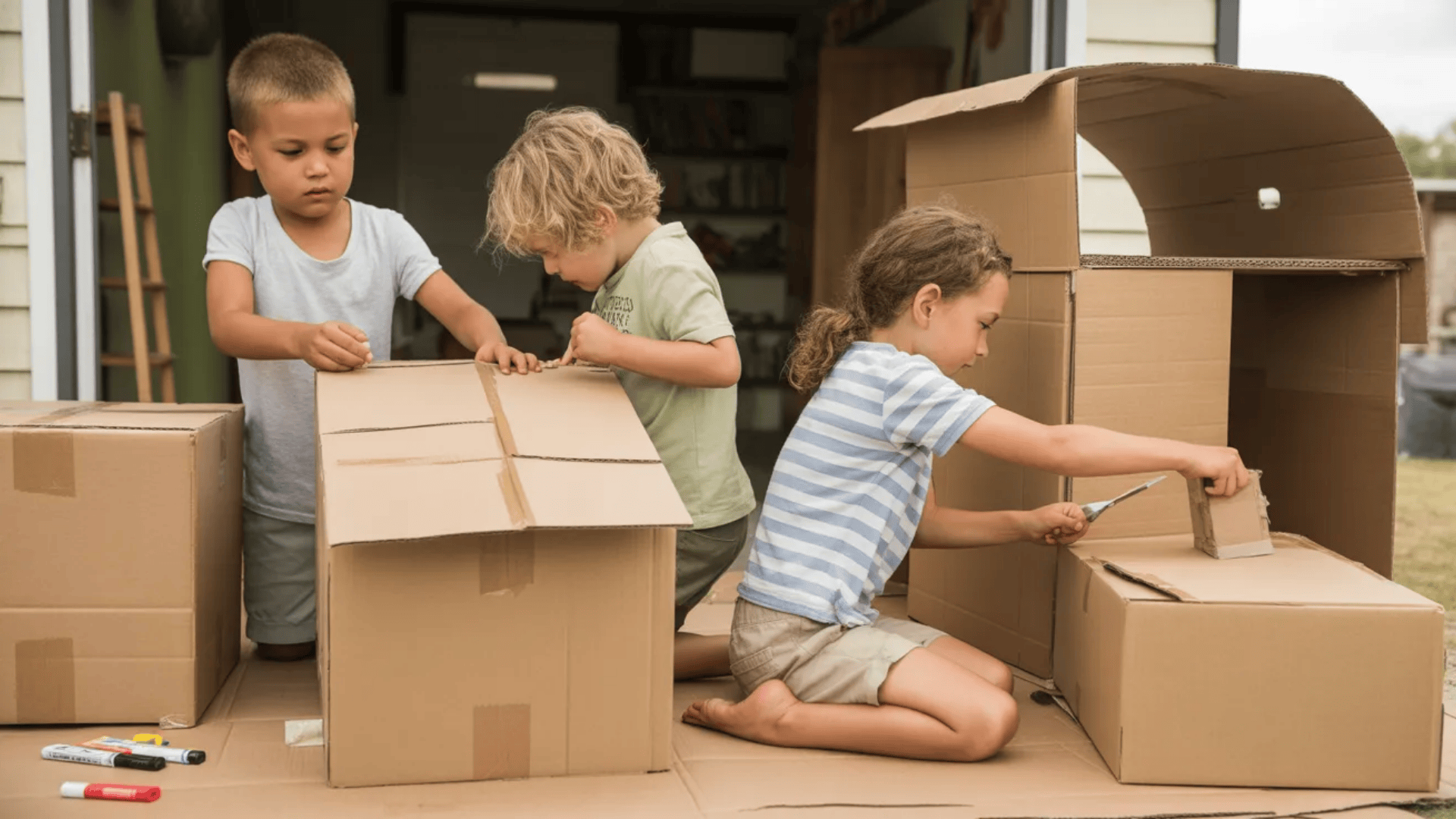
Save large cardboard boxes for creative building projects. Kids can make forts, castles, rocket ships, or stores.
Provide scissors, tape, and markers for construction. Let kids design and build without too many rules. They’ll surprise you with their creativity.
Cut windows and doors in the boxes. Tape multiple boxes together for larger structures. Decorate with paint, markers, or stickers.
Cardboard creations can last weeks with careful play. Move them outside on nice days. Bring them in when rain threatens.
When kids lose interest, recycle the cardboard guilt-free. The hours of play justify the temporary clutter. Plus, cardboard building costs almost nothing.
20. Make Homemade Playdough
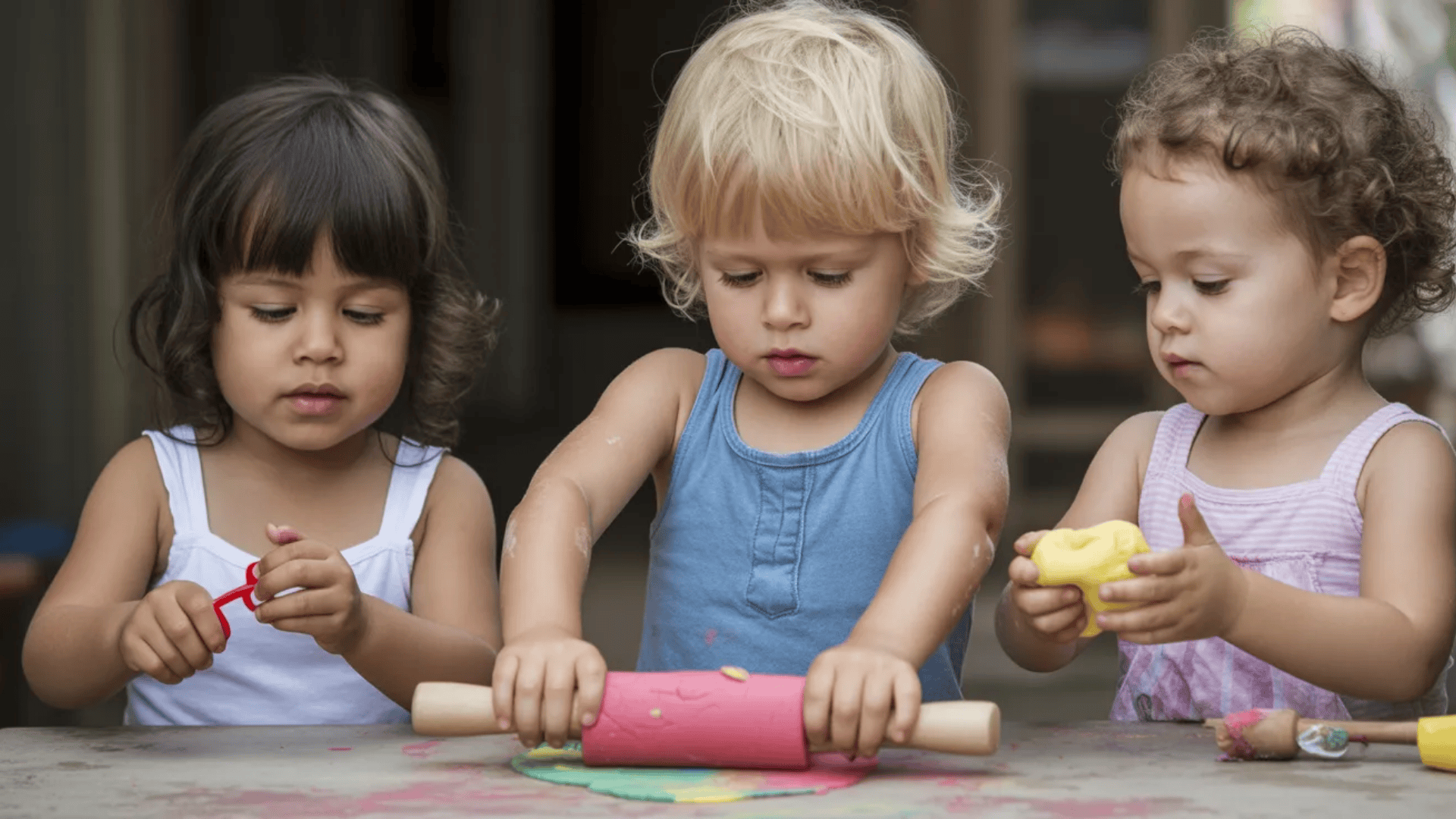
Mix flour, salt, cream of tartar, water, and oil. Cook on the stove while stirring constantly.
Add food coloring for different colors. The dough cools quickly and lasts for weeks in sealed containers.
Kids can roll, squish, and shape the playdough endlessly. Provide cookie cutters, rolling pins, and plastic tools. They’ll create snakes, balls, pretend food, and more.
Homemade playdough is safer than store-bought versions. You know exactly what goes into it. Plus, it costs pennies to make.
Store each color separately to prevent mixing. When playdough dries out, just make a fresh batch. The simple recipe comes together in minutes.
21. Paper Airplane Contest
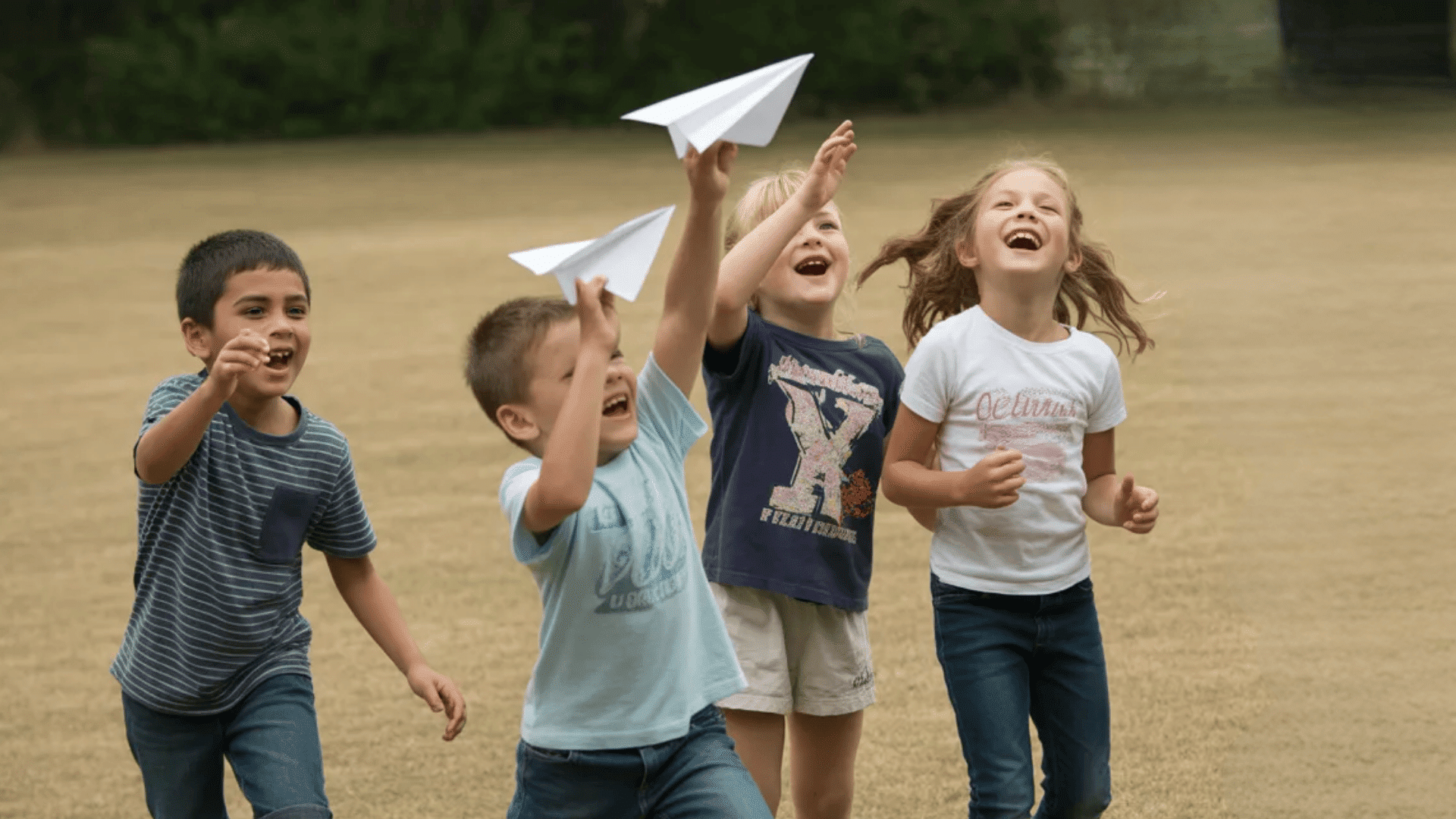
Fold different styles of paper airplanes. Try basic darts, gliders, and stunt planes.
Test each design to see which flies farthest. Measure distances with a tape measure. Keep track of winners on a chart.
Hold contests for longest flight, straightest path, and most loops. Award silly prizes like extra dessert or choosing dinner.
Kids learn about aerodynamics through trial and error. They discover which folds create better flight. Adjust designs based on test flights.
Take the contest outside for more flying space. Decorate planes with markers before launching. Paper airplane day becomes a favorite summer tradition.
22. Create Sock Puppets
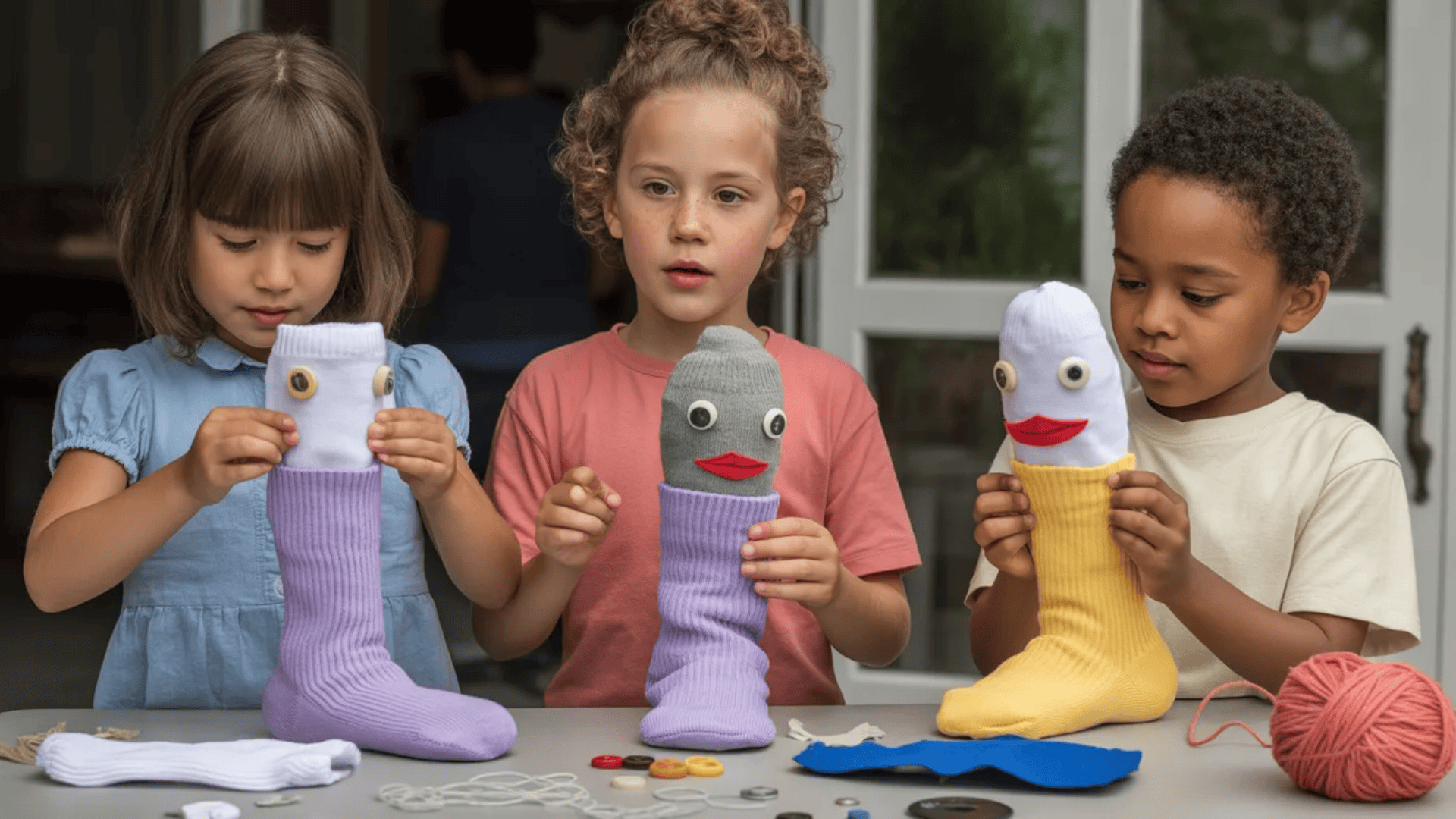
Grab old socks that lost their partners. Add buttons, felt, yarn, and googly eyes.
Glue or sew features onto the sock. Make eyes, mouths, hair, and ears. Each puppet develops its own personality.
Kids can put on puppet shows for their family. Create stories and dialogue for their characters. Build a simple stage using a cardboard box.
Sock puppets spark imagination and storytelling skills. Kids practice speaking and performing. Shy children often open up through puppet play.
Store finished puppets in a special box or bag. Kids will return to puppet play throughout the summer. New shows and stories develop with each session.
Active Sports and Games
Kids need to move their bodies every day. Physical activity keeps them healthy, strong, and happy.
Sports and active games burn energy naturally. They improve coordination, balance, and strength. Kids who play actively sleep better at night and focus better during quiet time.
You don’t need expensive equipment or organized teams. Most of these activities use basic items like balls, ropes, or nothing at all. Your backyard or local park becomes the perfect playground.
Active play also teaches important social skills. Kids learn teamwork, fair play, and how to handle winning or losing. These lessons stick with them long after summer ends.
23. Backyard Kickball Game
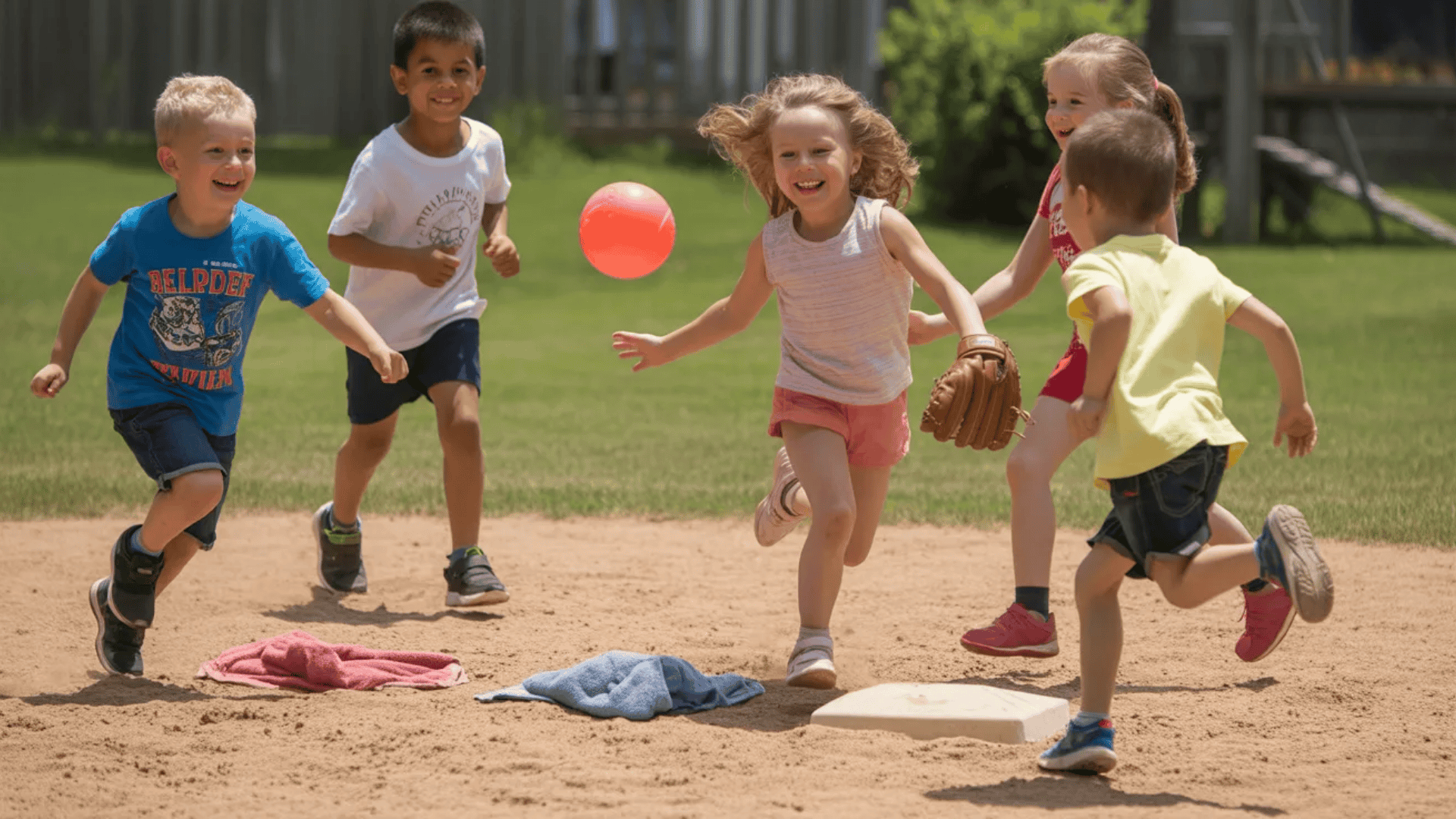
Set up bases using towels, plates, or markers. Divide kids into two teams.
One team kicks while the other fields. Pitcher rolls the ball and kicker boots it. Run the bases just like baseball.
Kickball works for mixed age groups. Younger kids can kick from closer distances. Older ones play by official rules.
This game gets everyone running and laughing. It builds leg strength and cardiovascular fitness. Kids don’t even realize they’re exercising.
Invite neighborhood kids to join. The more players, the more fun. Kickball tournaments can last all afternoon with snack breaks between games.
24. Jump Rope Challenges
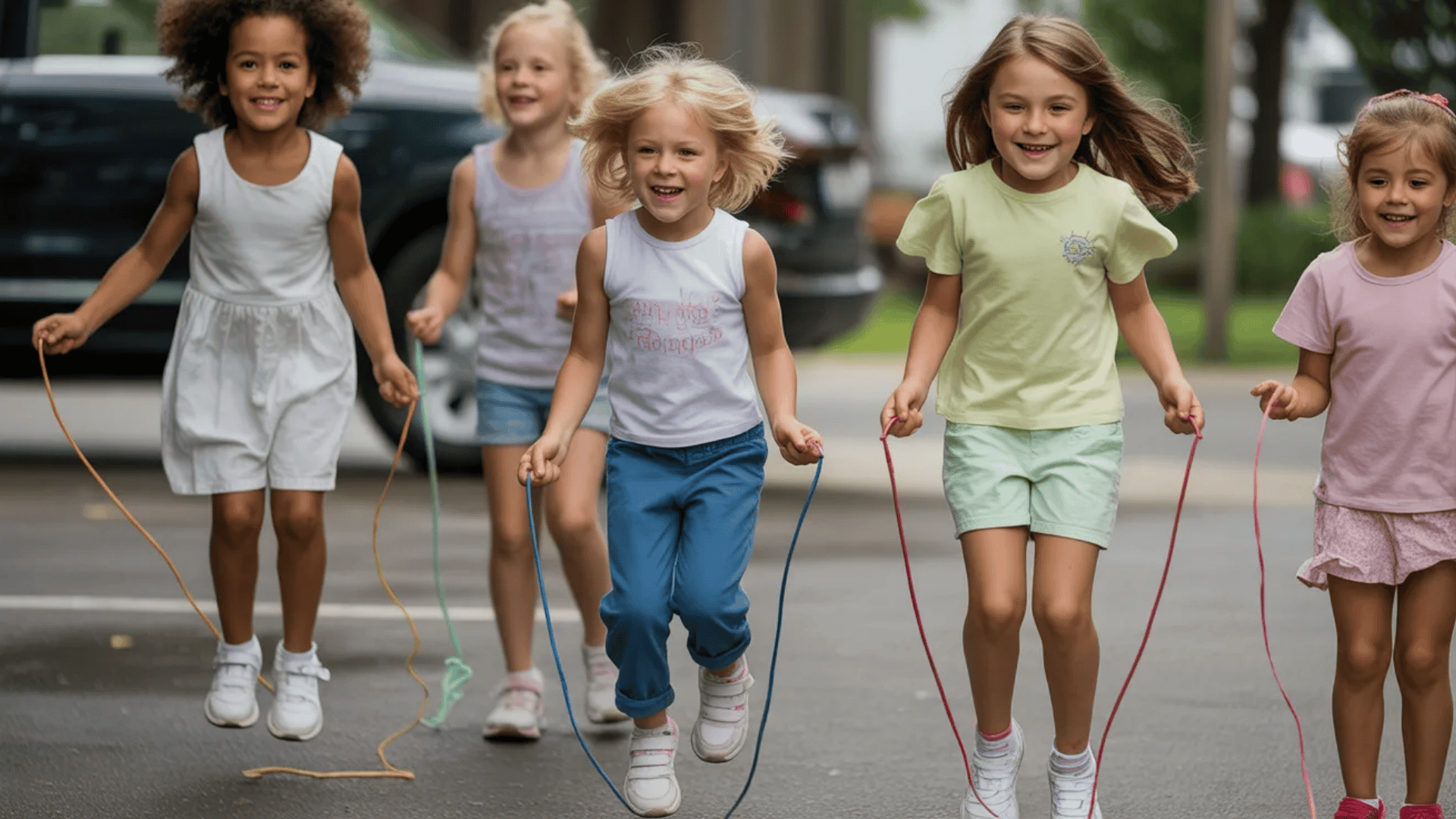
Find a jump rope and head outside. Start with basic jumping and progress to tricks.
Try jumping on one foot. See how many jumps in a row are possible. Time each person and track improvements.
Two people can turn a long rope while others jump in. This takes practice and coordination. Kids cheer each other on as skills improve.
Jump rope rhymes make the activity more fun. Sing songs while jumping to keep the rhythm. Search online for traditional jump rope songs and games.
This simple activity provides serious exercise. It strengthens legs, improves timing, and boosts endurance. A jump rope costs little but offers unlimited entertainment value.
25. Relay Races
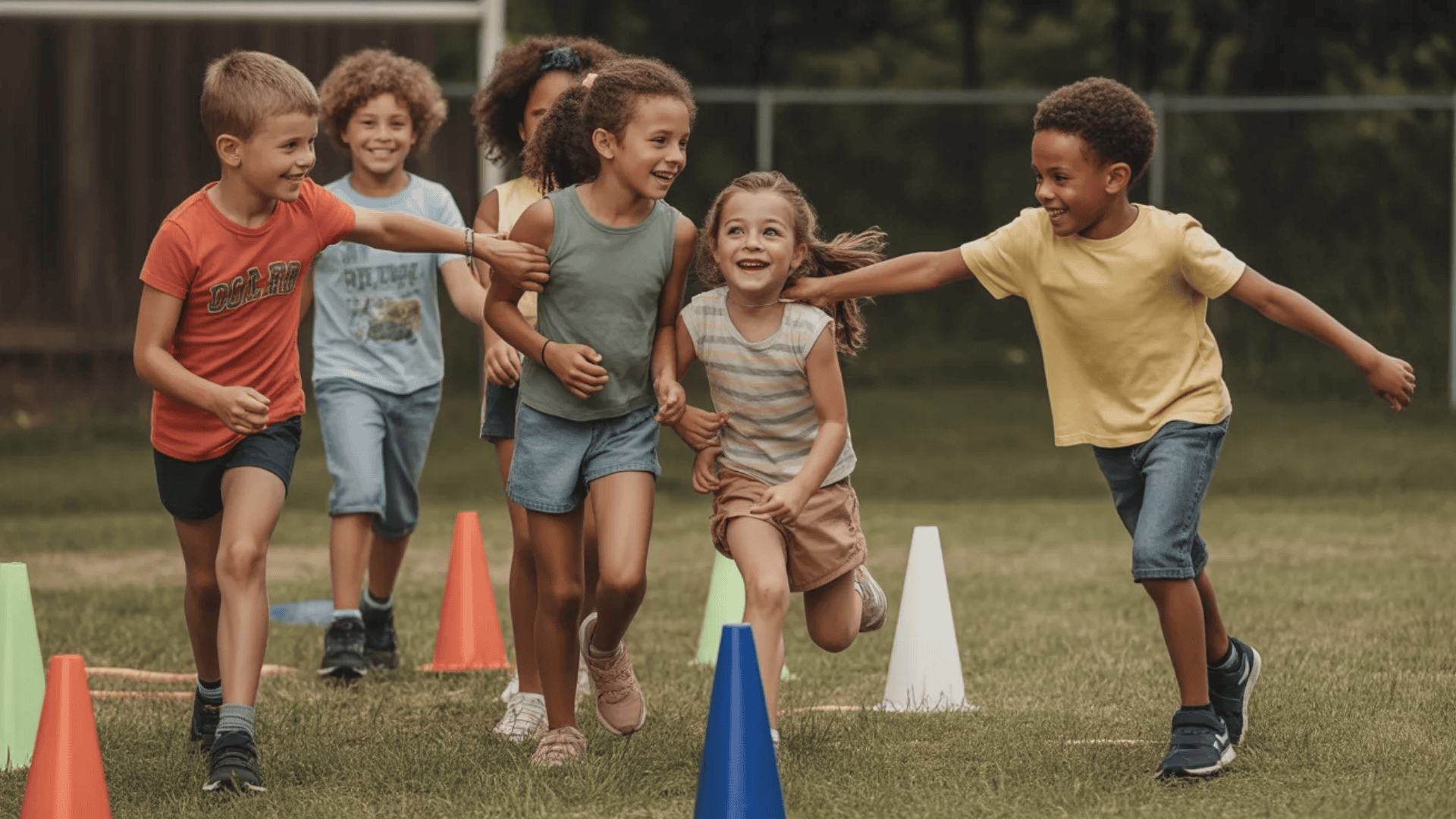
Create relay courses using household items. Try egg and spoon races, three-legged races, or sack races.
Divide kids into teams. Each person completes the course, then tags the next teammate. First team to finish wins.
Make obstacles using cones, hula hoops, or chalk lines. Kids hop, skip, crawl, or run through the course. Change it up each round to keep things interesting.
Relay races teach teamwork and patience. Kids learn to encourage teammates. They practice good sportsmanship, win or lose.
Award small prizes like stickers or choose the next game. Keep races light and fun. The goal is movement and laughter, not intense competition.
26. Frisbee Golf
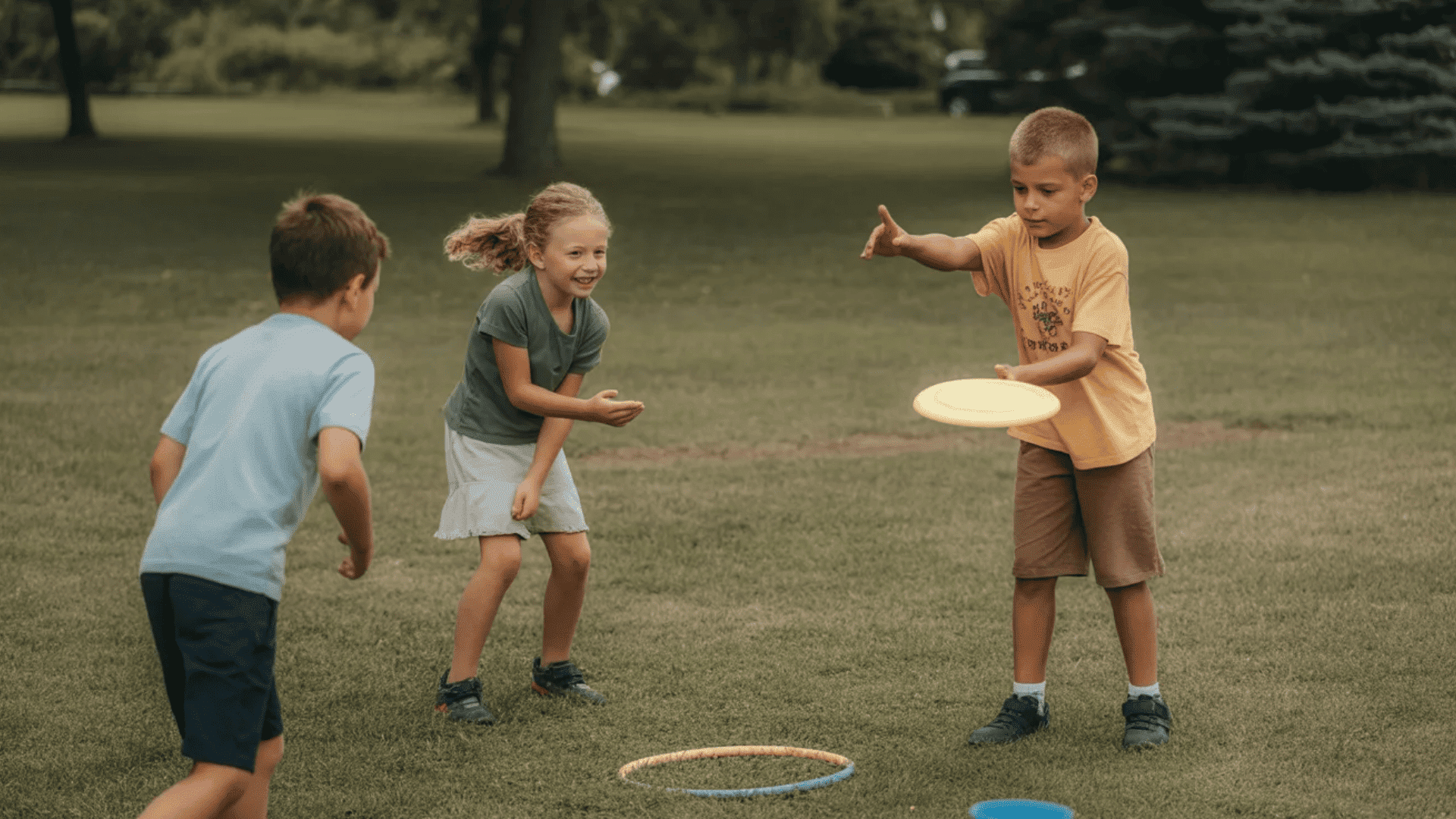
Set up targets around your yard. Use trees, buckets, or hula hoops as goals.
Players throw frisbees trying to hit each target in order. Count how many throws it takes. Lowest score wins.
This game teaches aim and control. Kids learn to adjust their throwing strength and angle. They develop spatial awareness and planning skills.
Make the course easier or harder based on age. Younger kids throw from closer distances. Older players need more challenging targets.
Frisbee golf costs almost nothing. One frisbee works fine, though having several speeds things up. Play alone or with groups of any size.
27. Obstacle Course Challenge
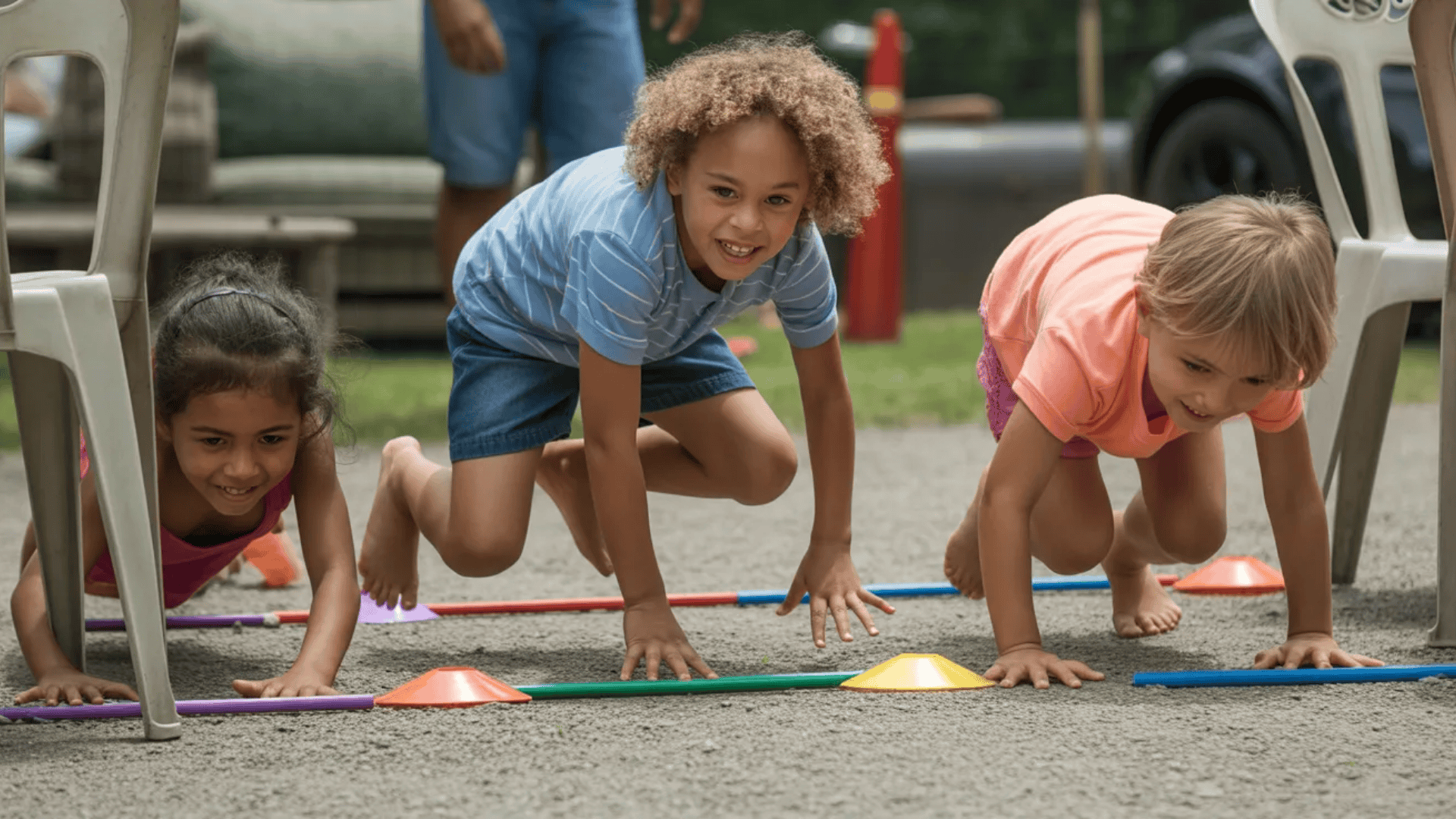
Build an obstacle course using whatever you have available. Include crawling under tables, jumping over pillows, and running between cones.
Add balance beams using two-by-fours on the ground. Create tunnels with chairs and blankets. Make kids hop on one foot through sections.
Time each child as they complete the course. They try to beat their own best time. This removes the pressure of competing against others.
Change the course layout regularly. Add new challenges or remove difficult parts. Kids help design new courses with their own ideas.
Obstacle courses build total body strength. They improve problem-solving as kids figure out the fastest route. This activity combines physical and mental exercise perfectly.
28. Classic Tag Games
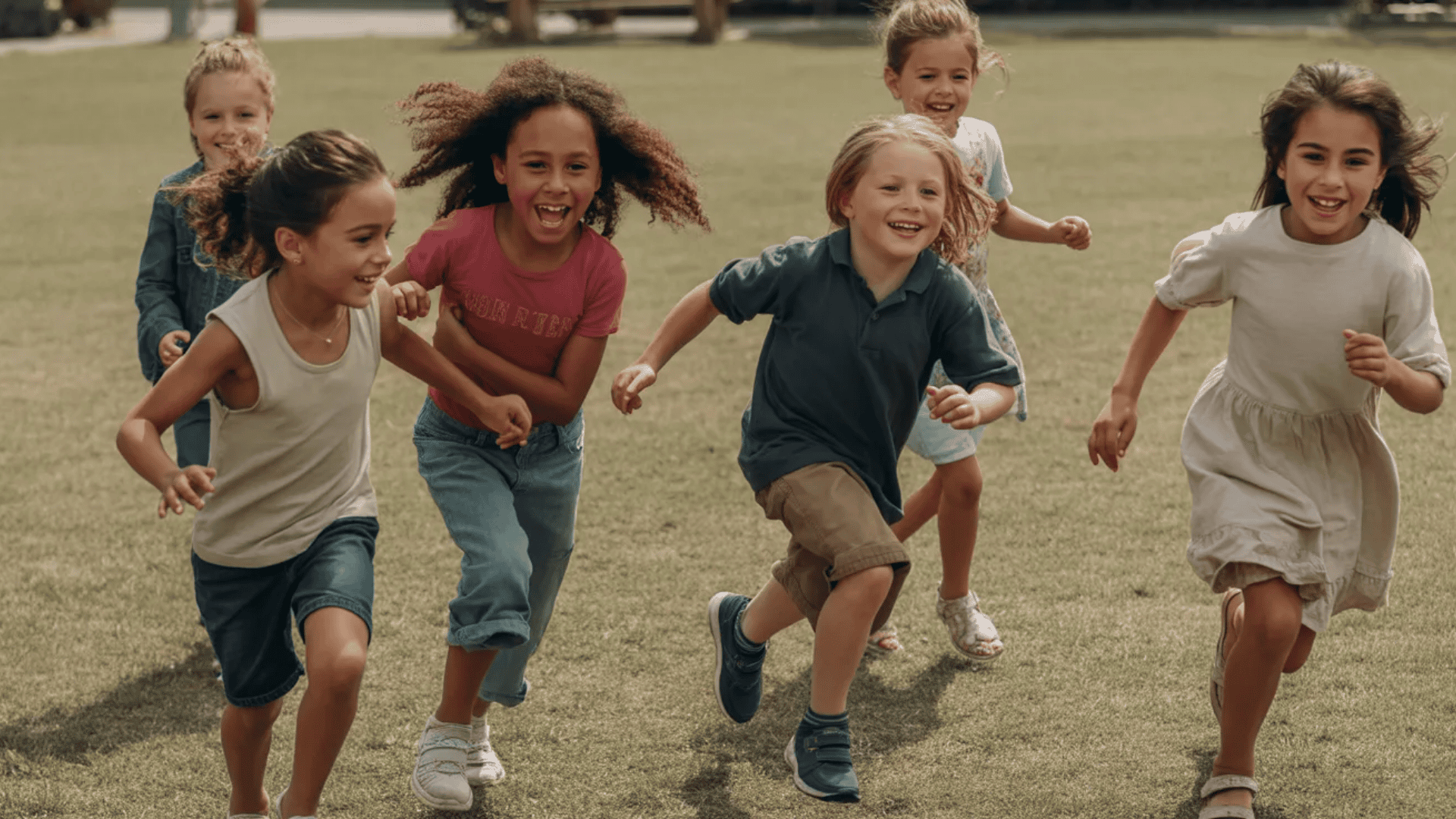
Play freeze tag, shadow tag, or TV tag. Each version has different rules but similar running.
In freeze tag, tagged players must freeze until another player unfreezes them. Shadow tag means stepping on shadows instead of touching bodies.
Tag games need no equipment. They work anywhere with open space. Kids make up new variations constantly.
These games provide intense cardio exercise. Heart rates go up while kids laugh and play. They don’t notice how hard they’re working.
Tag teaches quick thinking and strategy. Kids learn to anticipate moves and change direction fast. It’s pure fun disguised as serious physical activity.
29. Bike Riding Adventures
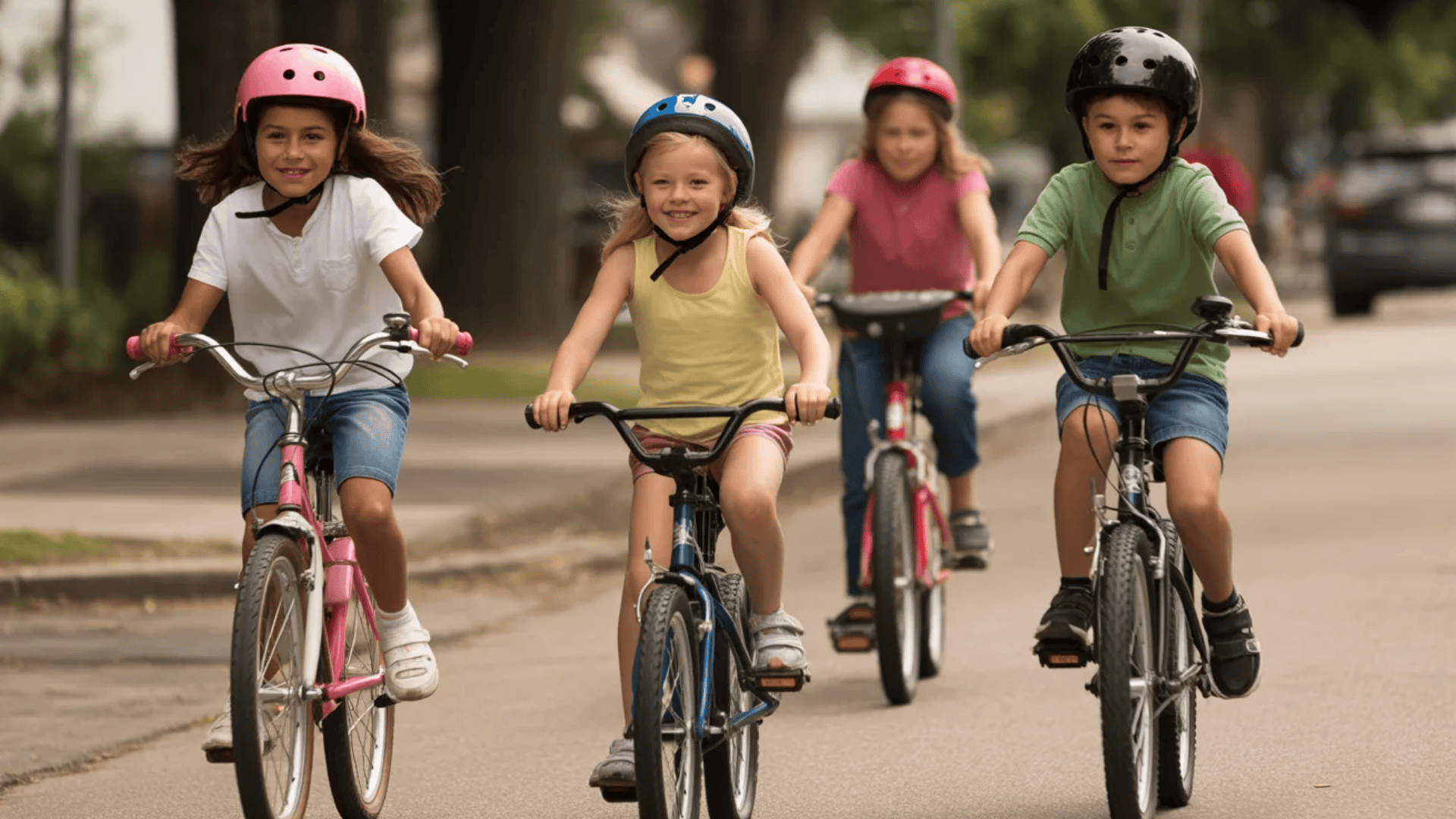
Go for family bike rides around the neighborhood. Explore new streets or bike paths together.
Pack water bottles and small snacks. Stop at parks along the way. Make the ride an adventure, not just exercise.
Teach kids basic bike safety rules. Always wear helmets. Use hand signals for turns. Stop at intersections and look both ways.
Older kids can ride to friends’ houses or the library. This builds independence and responsibility. They learn navigation skills and street awareness.
Regular bike rides strengthen legs and improve balance. Kids develop endurance over time. Plus, biking becomes lifelong transportation and recreation.
Educational Summer Fun
Summer learning doesn’t have to feel like school. These activities sneak education into playtime naturally.
Kids lose academic skills over long breaks without practice. Teachers call this summer slide. But learning can happen through games, experiments, and exploration.
Educational activities keep minds sharp and curious. They prevent boredom while building knowledge. Kids won’t even realize they’re learning because they’re having too much fun.
These ideas cover math, science, reading, and critical thinking. Choose activities that match your child’s interests. Learning sticks better when kids enjoy what they’re doing.
30. Start a Summer Reading Challenge
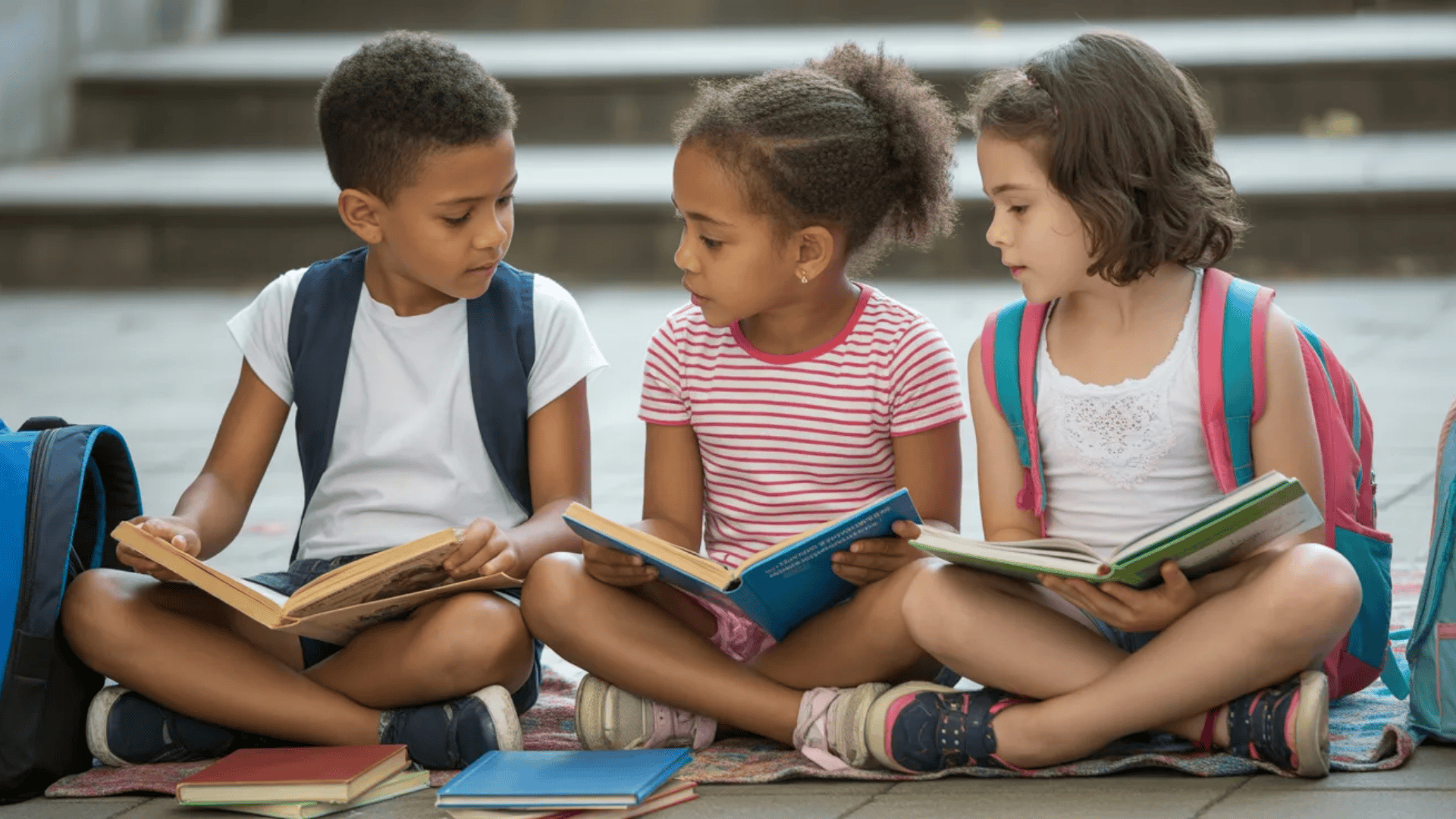
Visit your local library and sign up for summer reading programs. Most libraries offer free prizes and incentives.
Let kids choose their own books. Mix fiction and nonfiction based on their interests. Graphic novels and magazines count too.
Set a daily reading time. Twenty minutes before bed works well. Reading regularly builds vocabulary and comprehension skills.
Create a reading log to track books finished. Kids can rate each book with stars. Seeing progress motivates them to keep reading.
Make reading social by discussing books together. Ask what they liked or didn’t like. Reading becomes a conversation instead of homework. Library trips turn into special outings to look forward to.
31. Kitchen Science Experiments
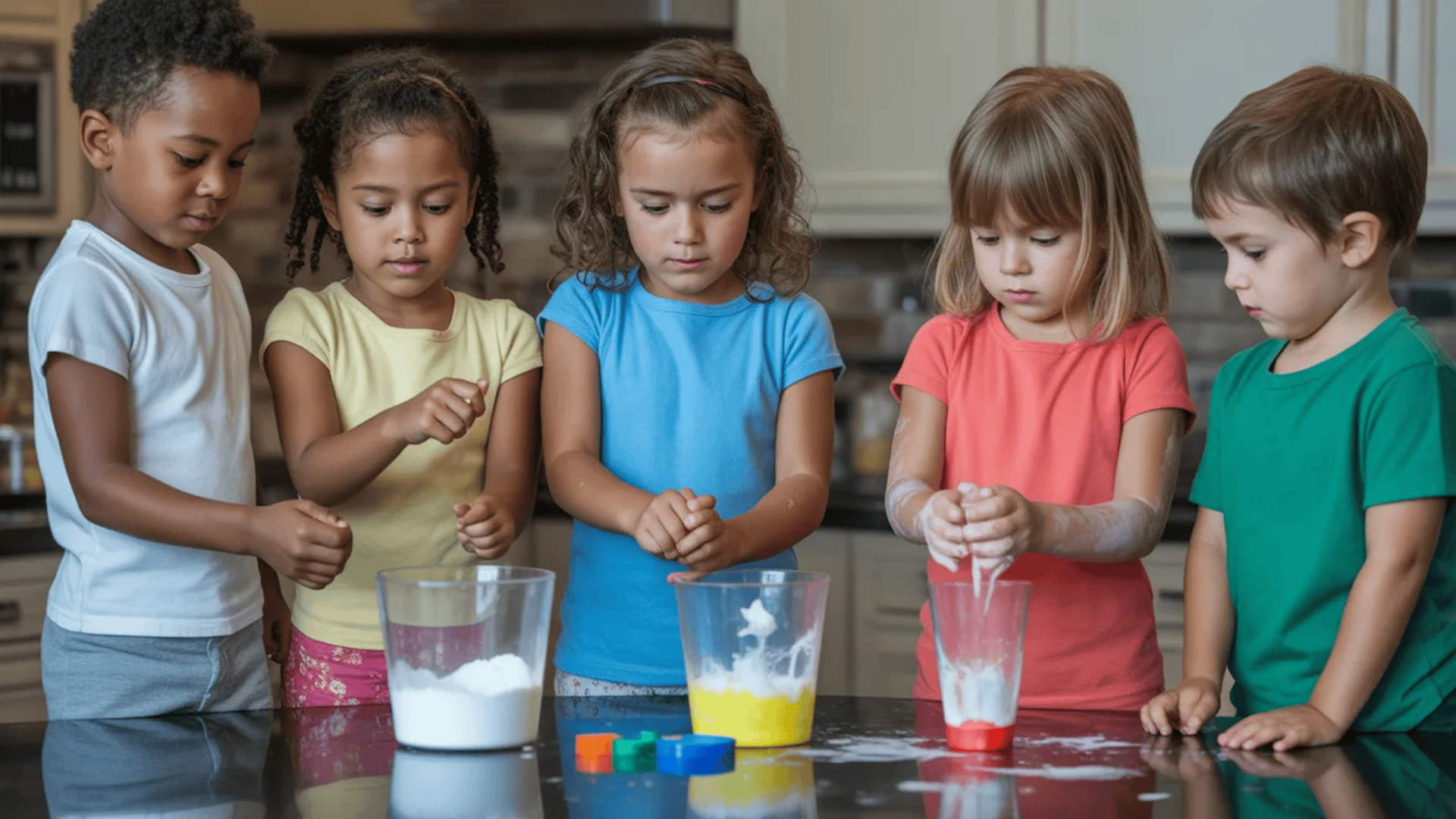
Turn your kitchen into a science lab. Try baking soda volcanoes, growing crystals, or making slime.
Most experiments use common household items. Vinegar, baking soda, food coloring, and dish soap go far. Search online for safe, simple experiment ideas.
Let kids make predictions before starting. What will happen when ingredients mix? This teaches the scientific method naturally.
Talk about why reactions occur. Explain simple chemistry concepts in kid-friendly terms. They learn while watching colorful bubbles and fizzy reactions.
Take photos or videos of experiments. Kids can create science journals documenting their findings. This combines writing practice with hands-on learning.
32. Backyard Math Games
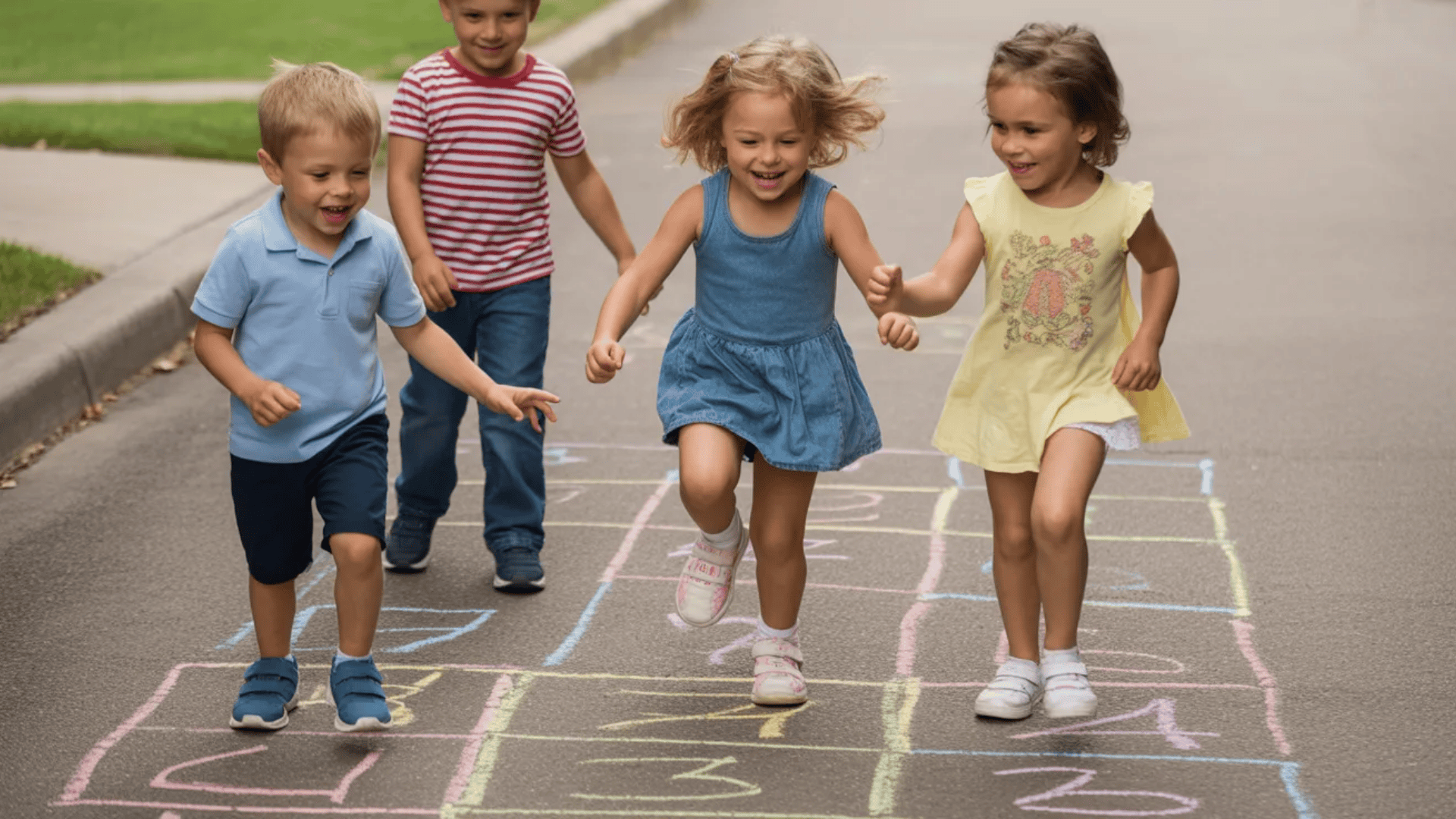
Practice math using sidewalk chalk. Write problems on the driveway for kids to solve by hopping to the answers.
Play store with real or pretend items. Kids practice counting money and making change. They learn addition and subtraction through buying and selling.
Measure things around your yard. How tall is the tree? How wide is the garden? Kids use rulers and tape measures for real-world math.
Cook together and follow recipes. This teaches fractions, measurements, and following directions. Doubling recipes practices multiplication naturally.
Math games remove the pressure of worksheets. Kids solve problems without realizing it. Numbers become tools instead of abstract concepts on paper.
33. Nature Journaling
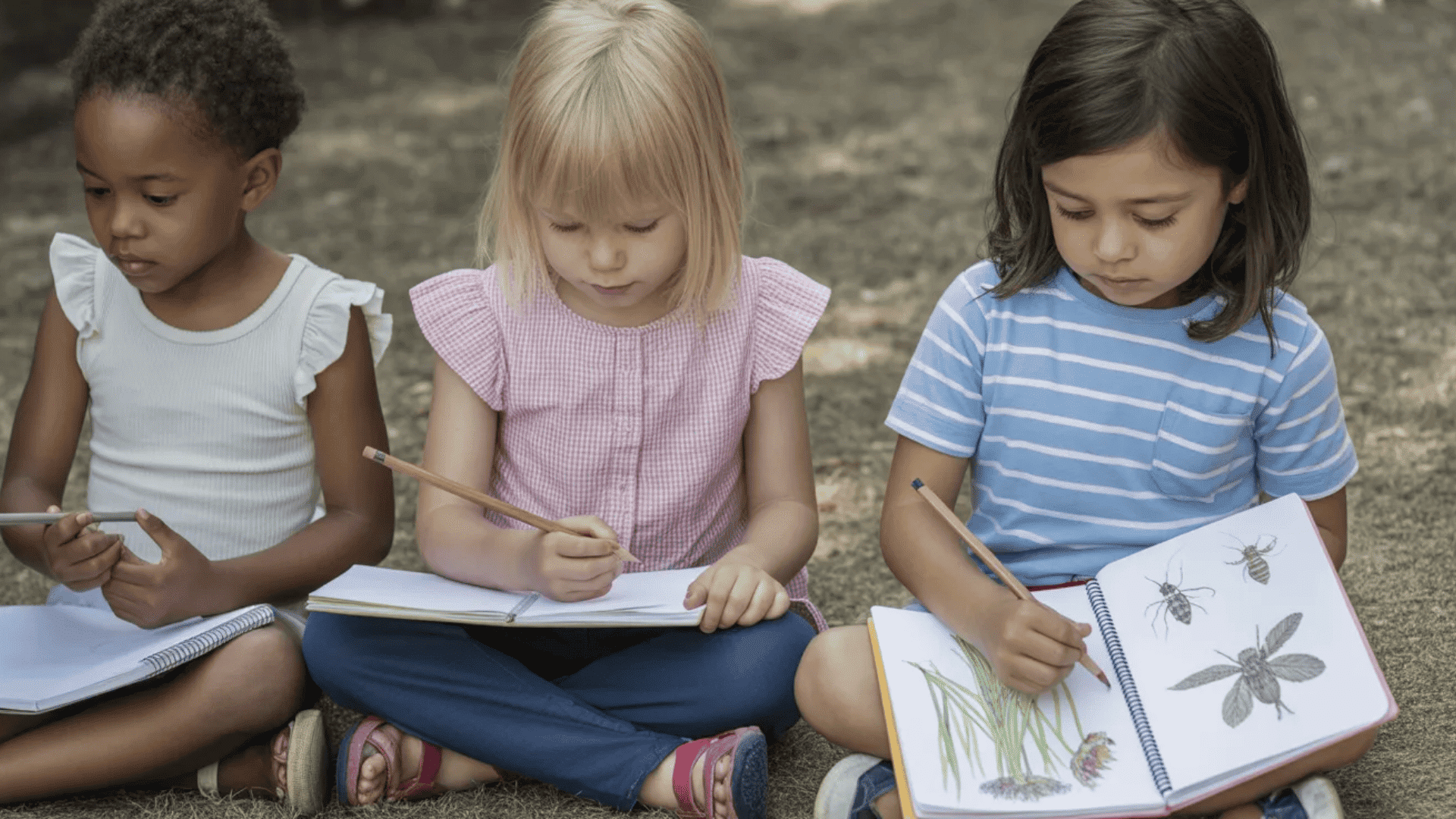
Give each child a notebook for nature observations. They draw and write about things they see outside.
Look for birds, insects, flowers, and weather changes. Kids sketch what they find and label parts. Add dates to track seasonal changes.
Writing descriptions builds vocabulary and observation skills. Drawing improves hand control and attention to detail. Both activities happen at the child’s own pace.
Encourage questions about nature discoveries. Look up answers together in books or online. Curiosity leads to deeper learning.
Nature journals become treasured keepsakes. Kids love looking back at entries from early summer. They see how much they’ve learned and observed.
34. Geography Treasure Hunt
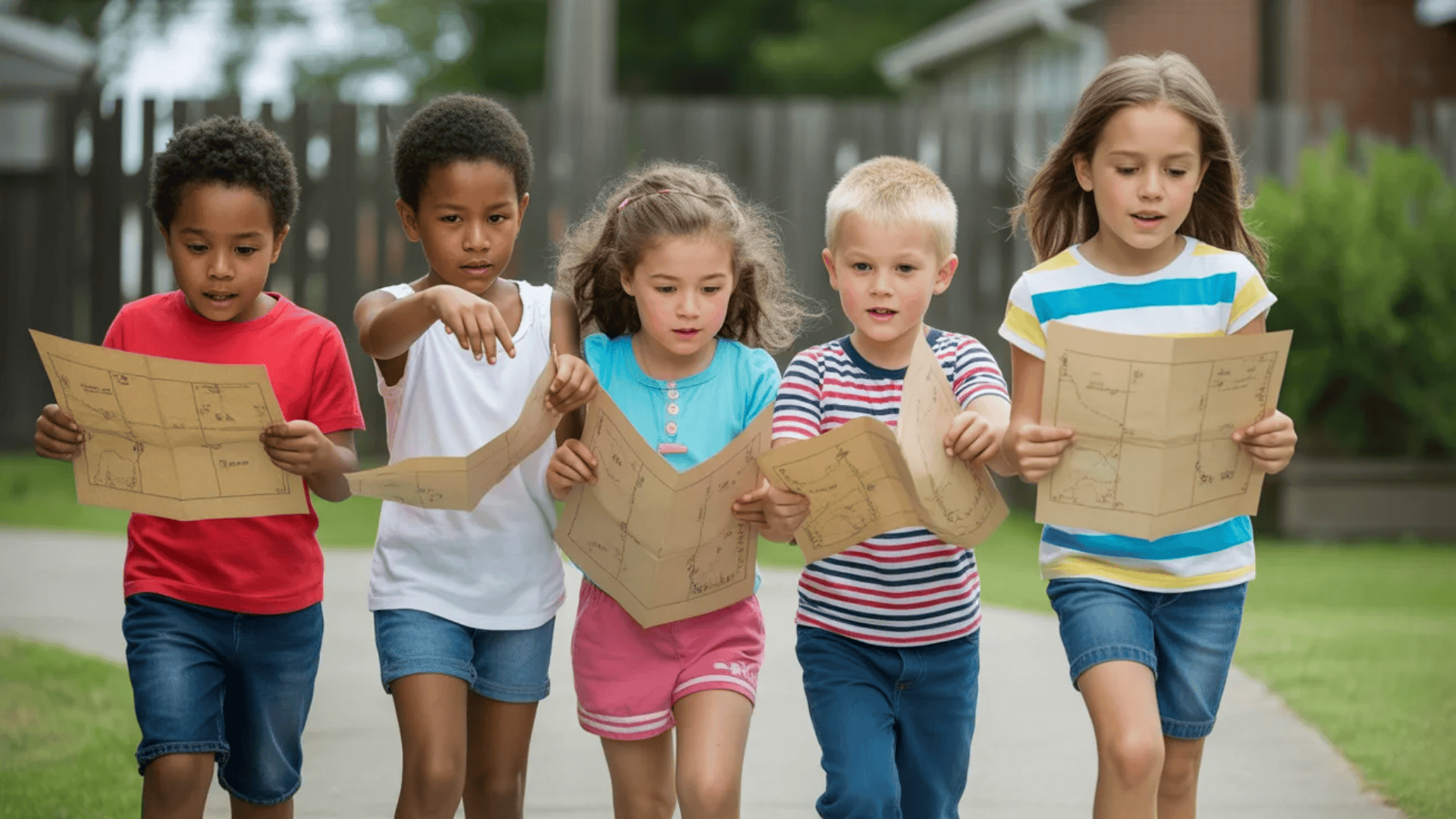
Use maps to create treasure hunts. Start with your house layout, then expand to the neighborhood.
Teach kids to read simple maps and follow directions. Use terms like north, south, left, and right. They learn spatial awareness and navigation.
Create clues using landmarks and distances. Kids count steps or use measuring tools. This combines geography with math and problem-solving.
Look at world maps and atlases together. Find places you’ve visited or want to visit someday. Learn about different countries, climates, and cultures.
Map skills help kids understand their place in the world. They learn direction, scale, and how maps represent real spaces. These skills last a lifetime.
35. Weather Station Project
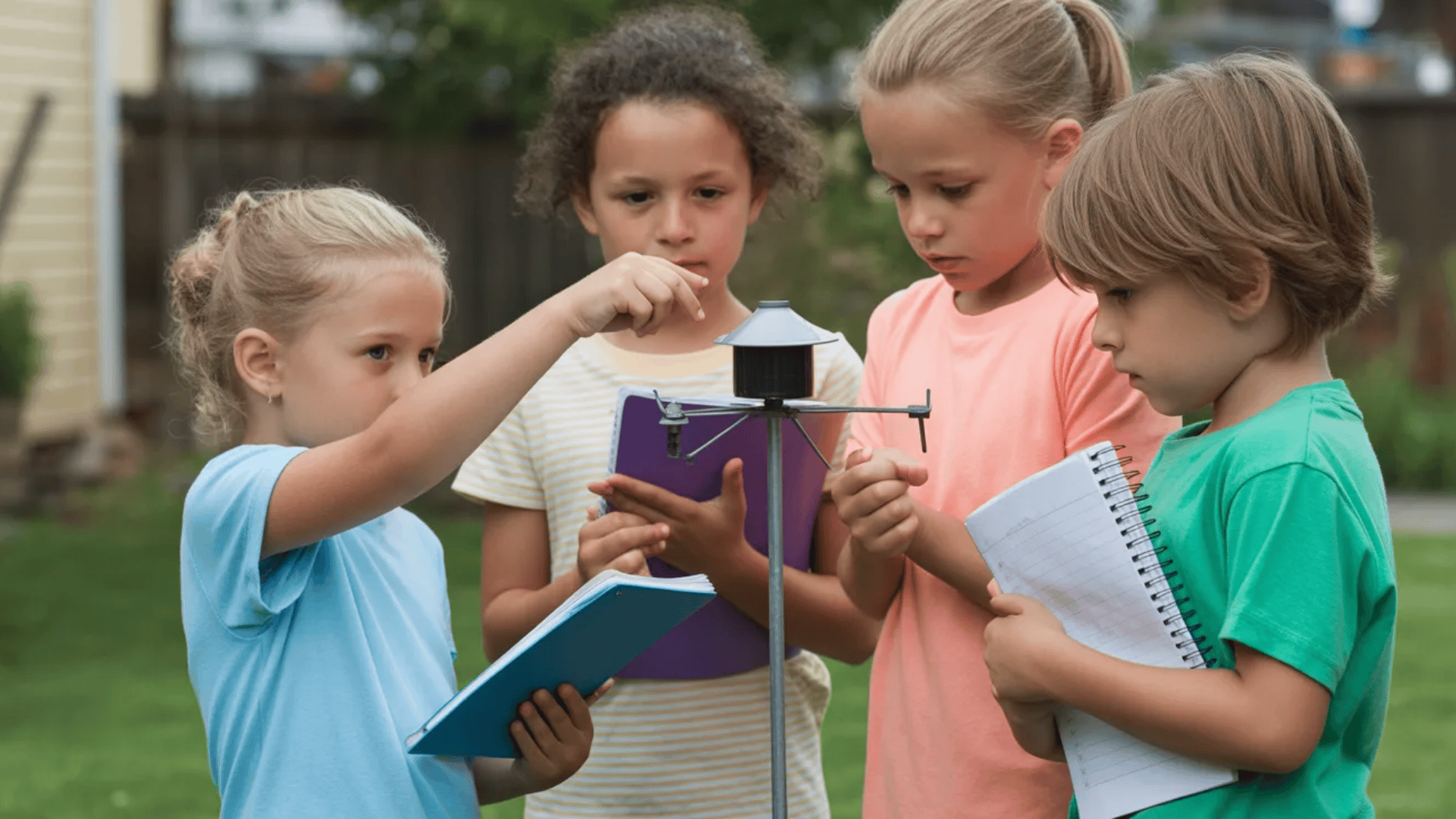
Build a simple weather station. Make a rain gauge from a plastic bottle. Create a wind vane using a straw and paper.
Check the weather daily and record findings. Track temperature, precipitation, and wind direction. Graph results to see patterns over time.
Compare your readings to official weather reports. Discuss why differences might exist. This teaches accuracy and attention to detail.
Learn about weather patterns and what causes them. Talk about clouds, fronts, and seasonal changes. Kids become junior meteorologists.
Weather watching connects science with daily life. Kids see practical applications of what they’re learning. They develop prediction skills based on observation and data.
Indoor Rainy Day Activities
Rain doesn’t have to ruin summer fun. These indoor activities keep kids entertained when the weather forces everyone inside.
Rainy days happen every summer. Kids get restless, stuck all day indoors. Having a list of indoor activities prevents boredom and whining.
Indoor play can be just as valuable as outdoor time. Quiet activities help kids recharge and use different skills. They learn to entertain themselves without constant screen time.
These activities require minimal setup and common household items. From building forts to hosting dance parties, there’s something for every mood and energy level. Save this list for those inevitable rainy afternoons.
36. Build a Blanket Fort
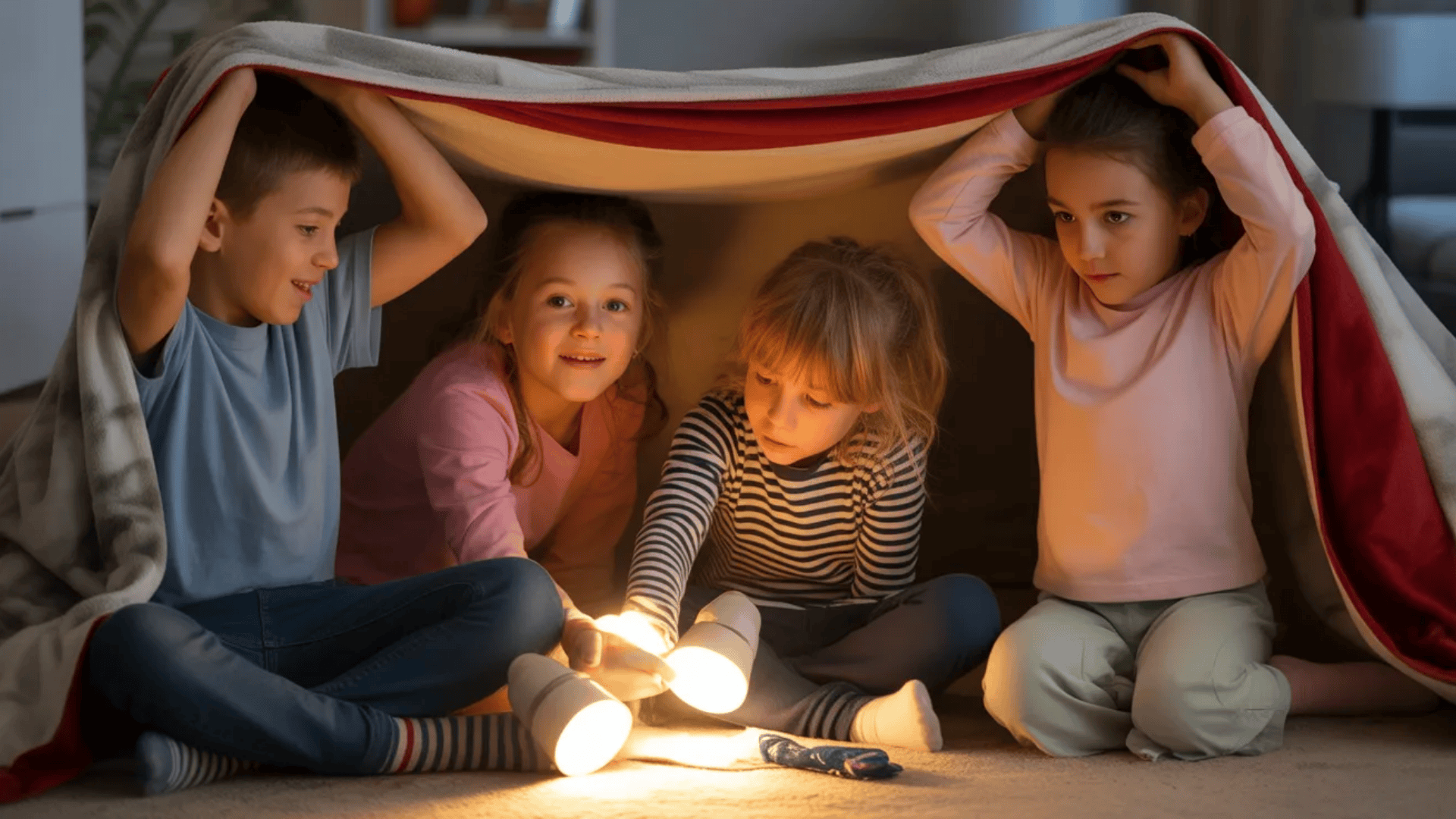
Gather every blanket, sheet, and pillow in the house. Use furniture, chairs, and clothespins to build an indoor fort.
Drape blankets over tables and chairs. Secure edges with heavy books or clips. Add pillows inside for comfortable seating.
Make the fort cozy with flashlights and favorite stuffed animals. Kids can read, play games, or just hang out inside their creation.
Fort building encourages problem-solving and spatial planning. Kids figure out which furniture works best as support. They learn to adjust when structures collapse.
Leave the fort up for several days if possible. Kids return to it repeatedly for different activities. It becomes their special hideaway space.
37. Indoor Scavenger Hunt
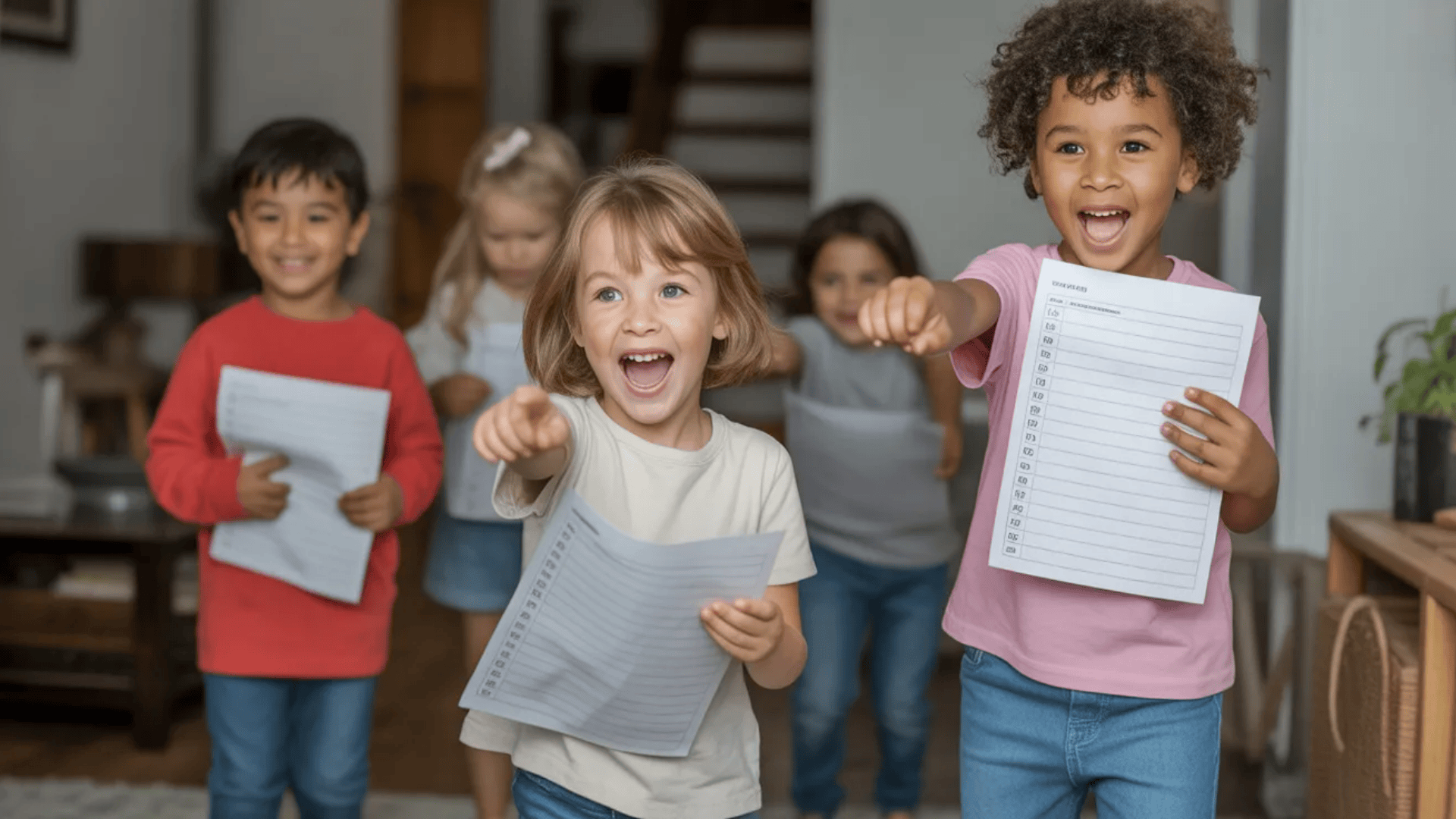
Create a list of items for kids to find around the house. Include things like something red, something soft, and something round.
Make clues challenging but achievable. Younger kids need simpler tasks. Older children can solve riddles to find items.
Set a timer to add excitement. Kids race to complete the list before time runs out. Or divide into teams for friendly competition.
Hide small prizes at the end. Stickers, candy, or choosing the next activity work well. The hunt itself provides most of the fun.
Change up the scavenger hunt each time. Look for alphabet items, color hunts, or texture searches. The possibilities are endless with creativity.
38. Host a Dance Party

Clear space in your living room. Create a playlist with everyone’s favorite songs.
Turn up the volume and let loose. Dance, however, feels good without worrying about looking silly. Movement releases energy and improves mood.
Add games like freeze dance or musical statues. When music stops, everyone freezes in place. Anyone who moves is out until the next round.
Teach kids simple dance moves or let them create their own. Older kids might enjoy learning TikTok dances together. Younger ones just wiggle and jump.
Dance parties tire kids out naturally. They get exercise without leaving home. Plus, dancing together creates joyful family memories.
39. Arts and Crafts Marathon
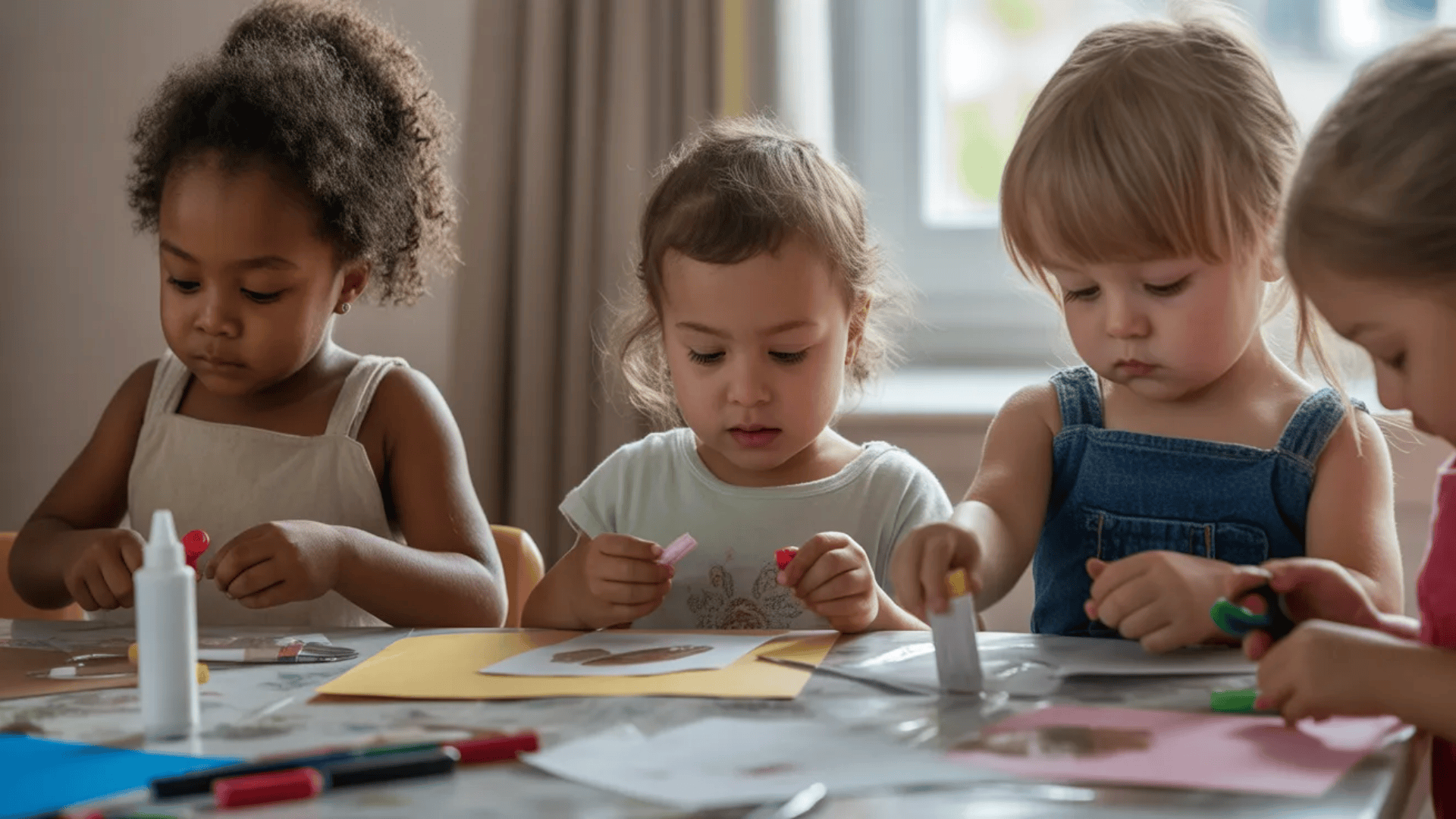
Spread out all your art supplies. Set up a crafting station at the kitchen table.
Let kids choose their projects freely. Provide paper, markers, scissors, glue, and any craft kits you have. They can draw, cut, paste, or build.
Put on music or an audiobook in the background. Kids work on projects while listening. This keeps them engaged for longer periods.
Display finished artwork around the house. Hang drawings on the refrigerator or create a gallery wall. Kids feel proud seeing their work showcased.
Crafting develops fine motor skills and creativity. It’s productive screen-free time. Plus, you’ll have artwork to remember this summer.
40. Board Game Tournament
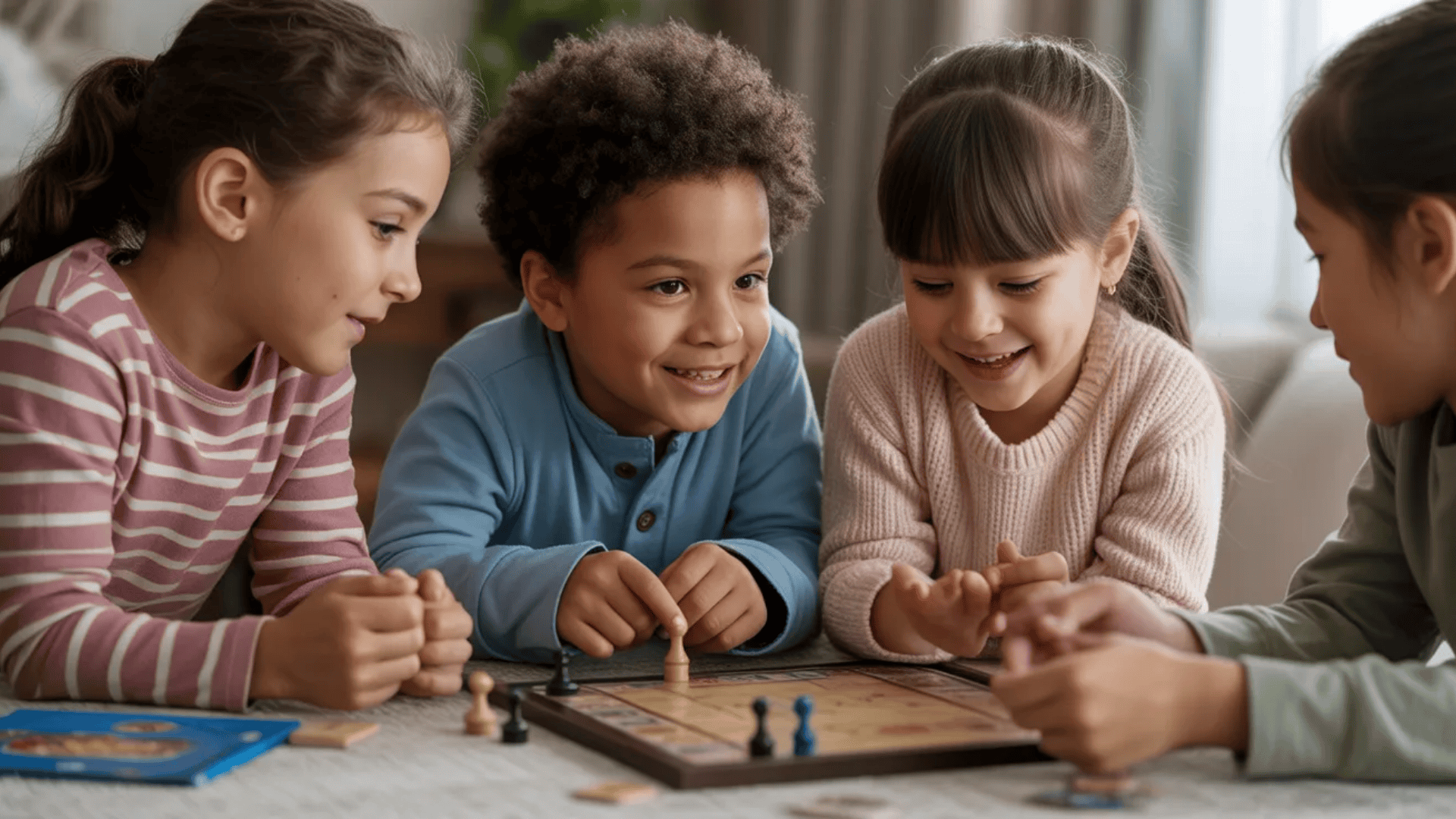
Pull out all your board games. Set up a tournament with brackets and prizes.
Play multiple games throughout the day. Keep score and crown winners of each round. Award silly titles like “Checkers Champion” or “Card Game Queen.”
Board games teach strategy, counting, and patience. Kids practice taking turns and following rules. They learn to win gracefully and lose without tantrums.
Let kids help choose which games to include. Mix easy and challenging options. Everyone should have a chance to win something.
End with a family game night dinner. Order pizza or make your favorite snacks. Game day becomes a special indoor celebration.
41. Indoor Camping Adventure
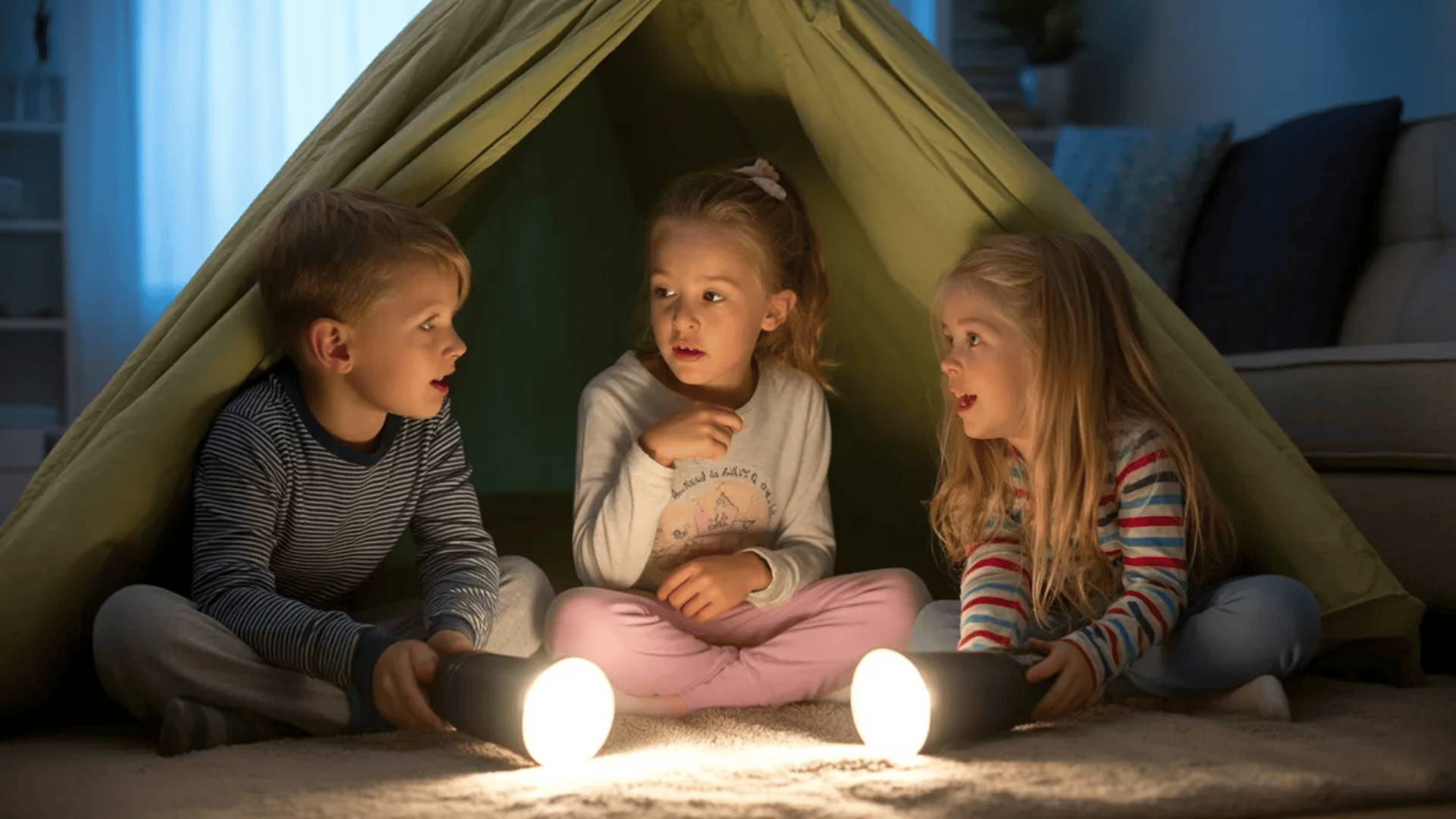
Set up a tent indoors or create one with blankets. Camp in your living room, complete with sleeping bags.
Make s’mores in the microwave or oven. Tell stories with flashlights. Play camping-themed games like “I Spy” or charades.
Pack pretend camping gear like backpacks and water bottles. Kids love the novelty of sleeping somewhere different. Even if they return to bed later, the attempt counts.
Watch nature documentaries or listen to outdoor sounds online. This brings the camping experience inside. Kids use imagination to feel like they’re really outdoors.
Indoor camping saves the day when rain cancels real camping trips. It’s also great practice for younger kids nervous about sleeping outside. The experience feels special without leaving home.
Conclusion
Summer boredom doesn’t stand a chance with these best summer activities for kids. You now have plenty of simple, affordable ideas to keep children entertained all season long.
From water play and nature exploration to crafts and active games, there’s something for every child and every day. Most activities cost little to nothing. Many use items already in your home.
Kids who stay active and engaged develop better. They build skills, make memories, and avoid excessive screen time. Your children will look back on these summers as the best years of their childhood.
Pick a few activities from this list to try this week. Let your kids help choose. Summer is short, so make it count.
Which activity will you try first?
Share your favorite summer ideas in the comments below!